
Fleet managers face mounting margin pressure while working to reduce costs without compromising performance or safety. According to the American Transportation Research Institute (ATRI), average trucking operational costs reached a record $2.336 per mile (with truckload and refrigerated operating margins under 1.0%), while Element Fleet Management’s 2026 Market Pulse research found that 78% of North American fleet leaders rank cost savings as their top priority. This list is organized from the simplest, lowest-effort strategies to those that require more time or investment, so you can take action based on your current priorities.
1. Monitor and Control Idle Time
Excessive idling wastes fuel while adding to engine wear and emissions. With North American diesel prices surging past $6.00 per gallon in Q3 2026 and holding near $5.937 per gallon in mid-November 2026, ATRI’s October 2026 Critical Issues report ranked fuel prices as the number-one industry concern. Telematics systems can identify habitual idling and alert managers in real time. Fleets that combine those alerts with driver coaching, as well as idle-reduction hardware and automatic engine shut-off policies, can significantly lower fuel costs and extend vehicle lifespans.
2. Train Drivers and Optimize Fuel Efficiency with Telematics
Fuel costs are one of the largest line items in fleet operations. Telematics platforms help monitor driver behavior, speed, route efficiency, and idle time. Pairing this data with ongoing driver training can reduce fuel consumption by up to 25%, while also improving safety and lowering emissions. According to the U.S. Department of Energy, aggressive driving can lower gas mileage by 15% to 30% on highways and 10% to 40% in stop-and-go traffic.
To protect margins during periods of volatile diesel pricing, many fleets are pairing driver coaching with two additional fuel controls:
Fuel surcharge audits: Reviewing shipper and broker surcharge tables that assume higher MPG baselines than older vehicles actually achieve.
Fuel-card geographic controls: Restricting fueling locations to take advantage of regional price spreads and prevent unauthorized purchases.
3. Implement a Fleet Key Management System
Misplaced keys lead to lost productivity, security risks, and unnecessary expenses for replacements and rekeying. A cloud-based fleet key management system reduces key-related downtime while eliminating manual processes and improving accountability. By combining real-time tracking with role-based access control and digital audit trails, you'll prevent unauthorized use and simplify driver dispatch.
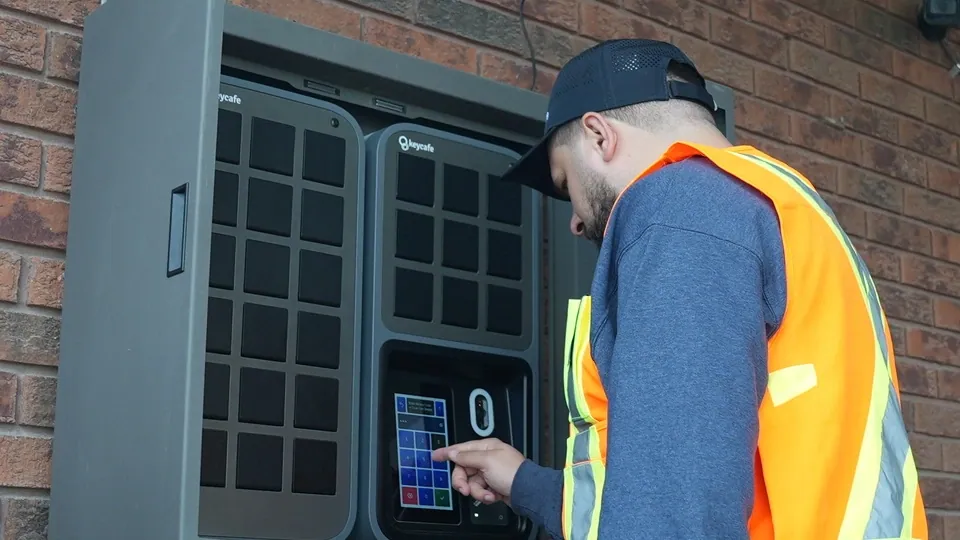
Using connected hardware like the Keycafe MS5 SmartBox or the weather-resistant KO-24 Outpost Outdoor SmartBox, drivers retrieve keys with unique PIN codes while managers receive instant notifications for every pickup and return. For example, Interlane Car Transport automated 24/7 key handoffs across its 90-truck fleet, eliminating manual folder tracking and extra trips between yards.
See: Fleet Key Management: 10 Tips to Prevent Lost Keys and Improve Key Control
4. Automate Manual Workflows
From driver check-ins to key issuance and logbook tracking, manual processes drain time and introduce errors. According to ATRI’s 2026 operational cost analysis, fleets reduced non-driver back-office staffing by 7.8% to control overhead, making automation essential for leaner teams. Automated systems streamline operations and cut administrative costs by handling key access as well as pre-trip inspections and mileage logging. For instance, restoration contractor SERVPRO Campbell stores vehicle and facility keys, along with gas cards, inside a Keycafe SmartBox so crews can start shifts on their own while managers track every access in real time.
5. Reduce Downtime with Preventive Maintenance and Smart Scheduling
Unplanned downtime can cost hundreds of dollars a day per vehicle, and maintenance expenses are rising fast. ATRI reported that repair and maintenance costs climbed 8.6% to $0.215 per mile, while Element Fleet Management found that 36% of North American fleets delayed vehicle replacements in 2026 due to tariffs and acquisition costs, and 53% are selectively investing in AI and telematics to curb maintenance and safety expenses.
Use real-time usage data and unit-level Total Cost of Ownership (TCO) analytics alongside manufacturer recommendations to set your preventive maintenance schedule. Proactive and AI-driven predictive maintenance help fleets identify when repair costs and downtime outpace financing a replacement, extending vehicle lifespan while lowering total lifecycle costs. Use software to schedule service around operational needs, ensuring minimal disruption to your routes and productivity. Heavy-duty fleets planning upcoming equipment purchases should also monitor the EPA’s July 2026 proposed amendments to Model Year 2027 NOx standards (still pending final rulemaking), which propose replacing Selective Catalytic Reduction (SCR) speed and power derates with operator warnings to help avoid costly roadside towing and unplanned downtime while cutting projected MY 2027 truck price increases by roughly $6,000 per unit.
6. Improve Route Planning and Vehicle Utilization
Inefficient routes make trips longer, which drives up fuel usage and causes missed service windows. To plan the most efficient schedules, route optimization software weighs load and location along with traffic and weather. A study by Geotab shows that optimized routing can cut mileage by up to 20%, which lowers fuel use and emissions while improving delivery performance. With ATRI’s 2026 cost breakdown showing tolls up 13.2% ($0.043 per mile) and tire costs up 6.4% ($0.050 per mile), combining route optimization with vehicle tracking ensures your assets run efficiently and avoid unnecessary toll and wear expenses.
7. Right-Size Your Fleet
An oversized or underutilized fleet wastes capital and operating budget, especially as ATRI data shows truck and trailer payments reached a record $0.404 per mile and insurance premiums rose 3.9% to $0.106 per mile. In response, fleets cut total truck capacity by 2.4% and left an average of 10% of trucks unseated. Run a fleet utilization audit to figure out which vehicles to retire and which ones you can repurpose or pool. Rightsizing ensures you maintain the right number and type of vehicles to meet demand: nothing more, nothing less.
8. Leverage Fleet Management Software Integrations
Disparate systems and manual data entry create inefficiencies. Integrating key management and dispatch with your telematics and maintenance tools in a centralized fleet management platform saves time and improves accuracy. Look for a system with APIs and off-the-shelf integrations for platforms like Fleetio, or alternatives such as Samsara and Geotab. For example, Keycafe offers an integration with Fleetio to connect key management with your maintenance workflows.
9. Prioritize Proactive Compliance to Avoid Revenue and Insurance Penalties
Compliance has become a direct cost-avoidance strategy for fleets. Following the U.S. Supreme Court’s May 2026 ruling in Montgomery v. Caribe Transport II, LLC, which allows state-law negligent-hiring claims against freight brokers, broker vetting of FMCSA Compliance, Safety, Accountability (CSA) scores has tightened sharply. Poor maintenance or Hours-of-Service scores can now result in lost freight loads and higher insurance renewal rates.
The FMCSA’s November 2026 revocation of 133 Electronic Logging Devices (ELDs) showed the financial risk of unvetted hardware, including emergency replacement costs and potential out-of-service orders. Auditing ELD vendor stability and contesting inaccurate roadside inspection violations through DataQs helps protect your CSA scores, as well as your insurance pricing and revenue.
Final Thoughts: Run Lean, Stay Agile
Reducing fleet costs isn’t about cutting corners. Rather, it’s about operating smarter. By adopting technology-driven solutions and rethinking traditional workflows, fleet managers can make measurable improvements in operational efficiency. Along with protecting the bottom line, these cost-saving strategies let your fleet scale and adapt so it stays competitive in a fast-changing industry.
Interested in learning how Keycafe’s key management platform fits into your cost-saving strategy?
Watch Our Demo Video
See how Keycafe helps fleet managers cut key-related downtime while automating access and increasing accountability.