
Ask anyone who runs a fleet or a dealership lot where a specific vehicle's key is right now, and you will usually get one of three answers: a drawer, a pegboard, or a shrug.
That is not carelessness. It is what happens when a system designed for twenty keys is still in use at four hundred.
Why vehicle keys are harder than building keys
A building key opens one door and mostly stays put. Vehicle keys behave differently, and the differences are what break manual systems.
They move constantly. A single key can pass through a salesperson, a valeter, a technician, a delivery driver and a customer in one day.
They leave the site. Test drives, service collections, deliveries, and staff taking a vehicle home overnight.
The asset moves too. You are not just tracking a key. You are tracking which key belongs to which vehicle, and the vehicle keeps changing position.
They are expensive to replace. A modern proximity key with immobiliser programming is not a £3 cut. Replacement and reprogramming on a single vehicle can run into hundreds, and for some models considerably more, plus the vehicle being off the road while it happens.
Loss has second-order costs. A missing key is not a missing key. It is a vehicle that cannot be sold, hired, serviced or dispatched.
What manual key handling actually costs
Most operations do not measure this, which is why it persists. The costs are real but distributed.
Search time. A few minutes per hunt sounds trivial. At a dealership with a busy Saturday, or a depot dispatching thirty vehicles at 6am, it is a meaningful share of someone's shift, and it happens at the worst possible moment.
Lost sales and lost hires. A customer waiting while three people look for a key is a customer forming an opinion. In a rental or car-sharing operation, a key that cannot be found is a booking that cannot be fulfilled.
Replacement and reprogramming. The direct cost, plus downtime.
Rekeying and security exposure. When a key goes missing from an open drawer, you often cannot say whether it was mislaid or taken.
Insurance and liability. Insurers care whether keys were secured. After a theft, "they were in a drawer in the back office" is a poor position.
Accountability gaps. When a vehicle comes back damaged, the question is who had it. Without a record, the answer is a conversation rather than a fact.
The four common systems, and where each fails
The drawer or the hook board. Fast, free, and completely open. Anyone on site can take anything, and there is no record. It works until the first dispute or the first theft.
The signed key log. A paper book or a spreadsheet. Better in principle, and it fails in the same way every time: it depends on busy people writing things down consistently at the exact moment they are in a hurry. Entries get skipped, initials are illegible, and nobody reconciles it. A log that is 80% complete is not an audit trail.
One locked cabinet, one shared key. The cabinet is secure and the credential is not. Whoever holds the cabinet key becomes a bottleneck during the day and irrelevant out of hours, and the code or key inevitably circulates.
A dedicated key management system. Individual credentials, defined access windows, and an automatic record of every collection and return.
What an automated key locker changes
The shift is from securing keys to controlling access to specific keys by specific people.
Access belongs to a person, not a cabinet. Each member of staff has their own credential. A technician can reach service keys. A salesperson can reach demonstrator keys. A valeter can reach the vehicles on their list. Nobody has blanket access because nobody needs it.
Time-bound by default. A driver collecting a vehicle for a Thursday delivery gets Thursday. A contractor gets a two-hour window. Overnight access can be restricted or opened deliberately rather than by accident.
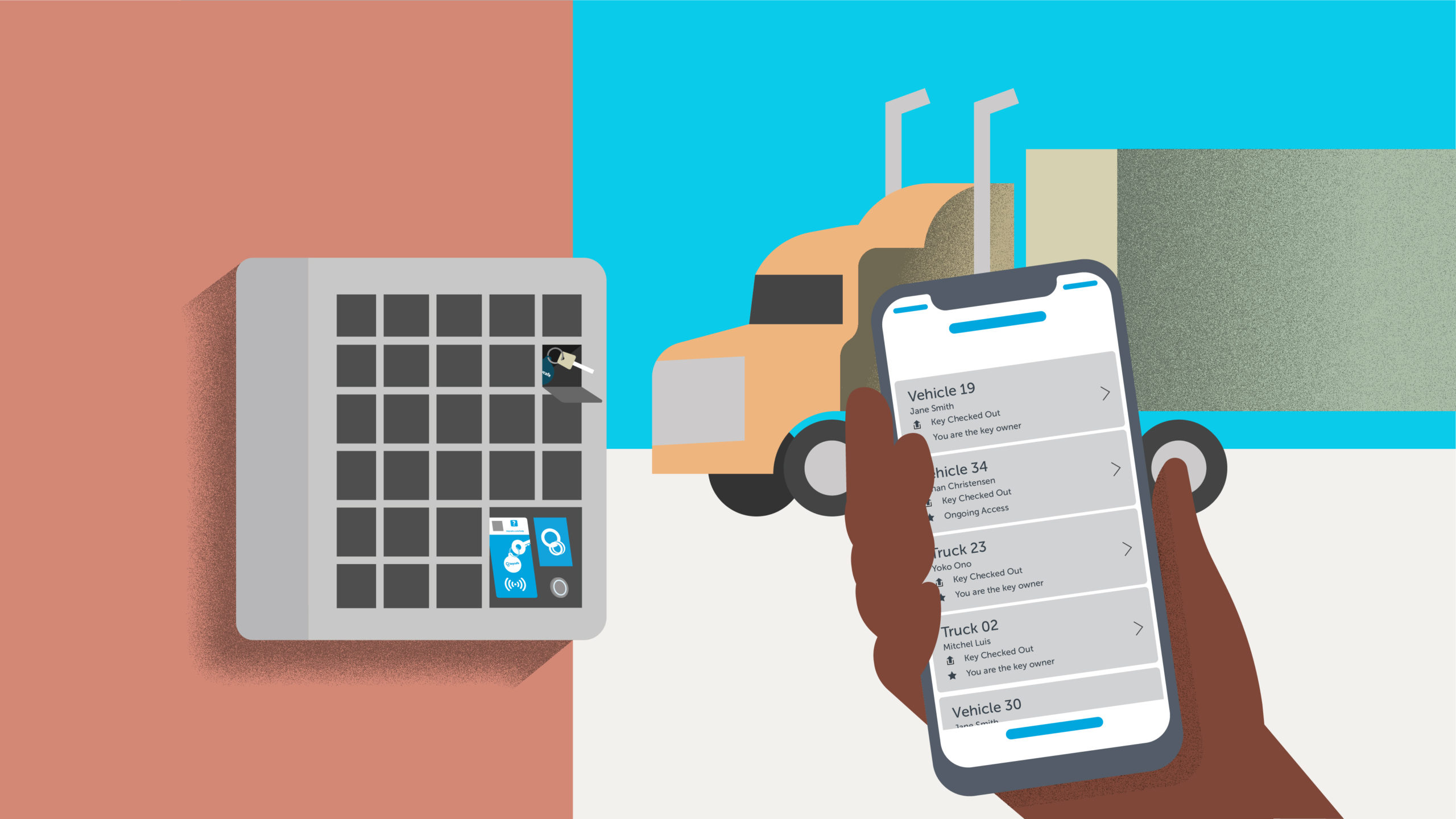
Every movement is recorded automatically. Who took which key, when, and when it came back. There is nothing to write down, which is precisely why the record is complete.
Revocation is instant. Someone leaves the business and their access ends that afternoon. No cabinet rekeying, no collecting fobs, no wondering.
You can see what is out. A dashboard showing which keys are currently signed out and by whom answers the 6am dispatch question before anyone starts looking.
24/7 operation. Depots dispatching before office hours, and staff returning vehicles late, do not need a manager present.
Where it fits
Dealerships. New and used lots, demonstrators, courtesy cars, service intake. The Saturday morning case is the obvious one, but the bigger win is usually service: a technician collecting the right key without interrupting anyone.
Rental and car sharing. Out-of-hours collection and return is the core problem, and it is the difference between a location needing staff and not.
Commercial and municipal fleets. Vans, plant, specialist vehicles. Often multiple depots, shift patterns, and drivers who start before the office opens.
Logistics and last mile. High vehicle turnover, high driver turnover, and a need to know who had what.
Body shops and workshops. Customer vehicles on site, high liability, and a genuine need to demonstrate custody.
Vehicle storage and auction. Large volumes of keys against large volumes of stock, with third parties needing controlled access.
Practical notes on deployment
Put it where the work is. The value comes from removing walking and waiting. A cabinet in a locked back office that only a manager can reach recreates the bottleneck you were solving.
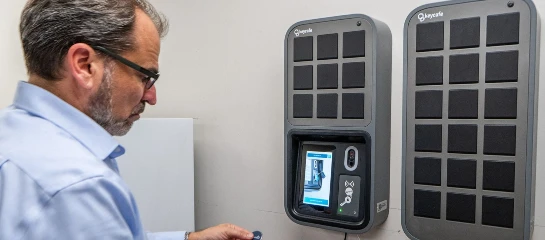
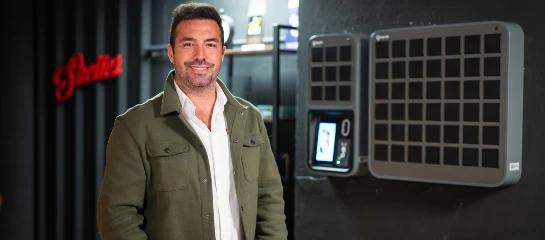
Size for growth, not today. A base unit holds 9 keys and expansion modules chain onto it, so a single installation can grow into the hundreds of keys without a second install. Multi-site operations run everything from one dashboard.
Indoors is the default. The hardware is weather-resistant and rated IP52, which suits sheltered positions, but a reception, a workshop wall or a secure lobby is the sensible location for most sites. Battery backup and offline operation keep it working through a power interruption, which matters at a depot dispatching at dawn.
Plan the credentials around roles, not individuals. Role-based access survives staff turnover. Person-by-person configuration does not.
Integrate rather than duplicate. There is a full API, so key events can be tied to your existing DMS, fleet management or booking system rather than maintained separately.
Do not forget non-vehicle keys. Most fleet sites also have plant rooms, fuel cabinets, gates, compounds and storage. Once a cabinet is in, those belong in it too.
The audit trail is usually the real reason
Operators tend to buy this for speed and keep it for the record.
The recurring situations where a complete, timestamped, named log earns its cost:
- A vehicle returns damaged and nobody remembers who had it
- A theft, and the insurer asks how keys were secured
- A customer disputes what condition a vehicle was in
- An employee dispute about access or responsibility
- An internal audit of a high-value asset base
- A pattern of losses you suspect but cannot evidence
None of those are solved by a more secure cabinet. They are solved by knowing who opened it.
Getting started
Most operations start with one site and the keys that cause the most trouble, then expand. That is the right order: prove the workflow, then scale it.
Configure a deployment or talk to our team about fleet and dealership setups.