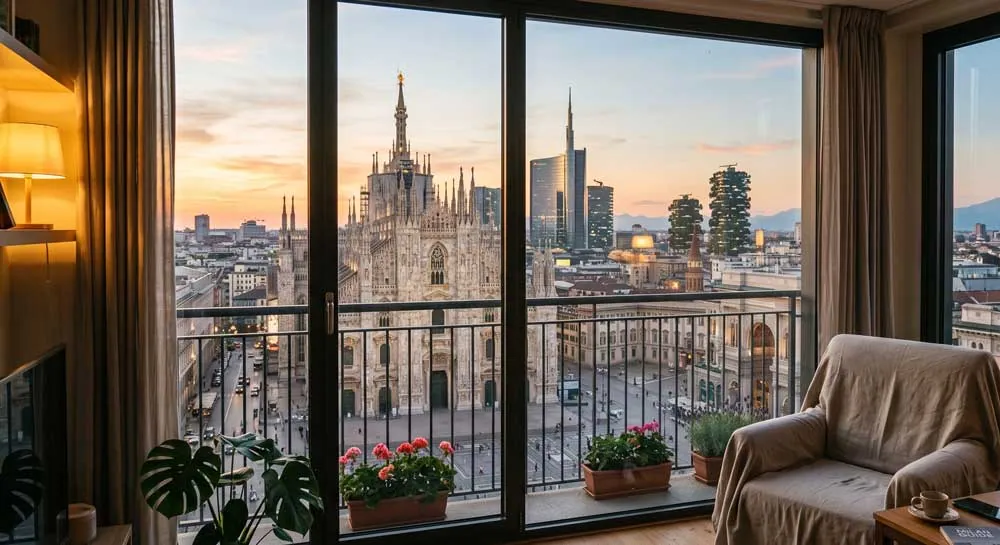

Milan does not have a tourist season. It has a fair calendar, and the difference shapes everything about how property is operated here.
Look at a single week. During Salone del Mobile 2026, running 21 to 26 April, short-term rentals across the city ran at 93 to 94% occupancy over five nights and generated in the region of €28 million in bookings. Tourist tax collected by the Comune during the period came to nearly €1.8 million, more than double the prior comparison. A well-placed two-bedroom in Brera or Garibaldi can take €3,000 to €5,000 gross across those six days.
For many Milanese apartments, Design Week alone is worth a month of ordinary revenue.
Then it happens again. Fashion Week in February and September. EICMA in November. MICAM and Mipel. TUTTOFOOD. The Monza Grand Prix. In an Olympic year, the February surge around Milano-Cortina. There is no month in the Milan calendar without something international arriving, which means there is no quiet stretch in which to catch up.
The guest is not a tourist
This is the part that separates Milan from every other Italian market, and it is worth being blunt about.
Milan is the most professionalised short-term rental market in Italy. Industry estimates put roughly 18% of the city's short-term rental homes under professional management, against about 5% in Rome. The clientele during fair weeks is a business audience: exhibitors, buyers, designers, brand teams, journalists and agency staff, often travelling on a company account, often arriving late from Linate or Malpensa after a full day, and frequently expensing the stay.
That guest has a hotel as their default alternative and will compare you to one. They are not charmed by a hunt for a lockbox behind a plant pot. They have a stand to build the next morning, and a failed check-in at eleven at night is not an anecdote, it is a complaint to whoever booked it.
They also have expectations about legitimacy. Corporate travel policies and expense processes want a proper invoice, a properly registered property, and a professional experience. That has made the Milan market unusually clean by Italian standards, and it raises the floor on what an operation has to look like.
Surge weeks break manual processes first
Here is what happens to a manually operated portfolio during Salone.
Occupancy runs above 90% and the whole city turns over on roughly the same days, so arrivals stack. Twenty apartments do not produce twenty arrivals spread across a fortnight. They produce eighteen arrivals in a thirty-hour window, most of them between five in the evening and midnight, in a city where the taxi queue at Centrale is forty minutes long and the tram is full of people carrying exhibition materials.
Cleaning is under the same compression. Changeovers that normally have a day of slack have three hours. Cleaning teams during Design Week are working for several operators at once and they are not going to wait outside a building for someone to arrive with a key.
Every manual key handover during that window competes directly with every other one, and they all want the same person at the same time. This is not a cost problem in the way it is in a quieter market. It is a capacity ceiling. Manual handover is the specific thing that stops a Milan operator from taking the twenty-first apartment.
Building for the peak
Two things make surge weeks survivable.
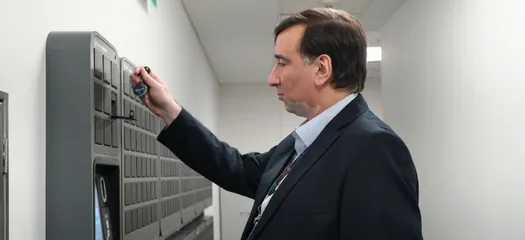
Take the handover off the critical path entirely. If arrival does not require a person, the stacking problem disappears. Eighteen simultaneous arrivals is only a crisis if eighteen people need meeting. A guest landing at Linate at 22:40 collects a key on their own schedule, and the cleaner who finished late is not the reason the next guest is standing on the street.
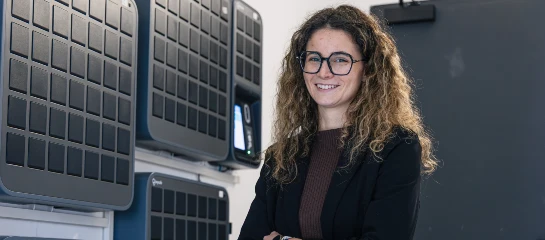
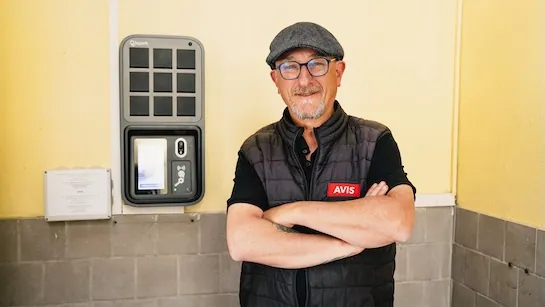
Have the capacity in place before the calendar turns. A cabinet starts at nine key positions and takes chained expansion modules on top of that, so an operator can hold considerably more keys than the current portfolio requires without a second installation or a second address to explain. Ordering hardware in the second week of April is a decision nobody makes twice.
Guest-facing arrival should assume the person is tired and in a hurry. Instructions in their own language, one address, one clear route from a named Metro stop, and a credential that works whether they scan it, tap it, key it in, or pull it out of their phone wallet.
Where the box goes, and one rule to know
Milan brought in a prohibition on keyboxes installed on public land from January 2026, targeting devices fixed to street furniture, signage, railings, gates and lamp posts, with fines in the range of €100 to €400 plus removal costs. The city was following Florence and Rome, and the rationale combined urban decorum with the guest identification question.
The practical effect is that the cheap box on the railing outside the building is finished. It does not affect an installation inside a private entrance, in a courtyard, or in a commercial space you control.
For a Milan portfolio the usual options are:
Inside the portone. The entrance hall behind the street door is condominium property, so it needs the condominio's agreement, but it is out of scope for the public land prohibition and out of the weather.
A commercial ground-floor space. Common for operators with a cluster in one district. It removes the condominio question altogether and gives you a street-level address at any hour, which the business guest will prefer anyway.
Per-building for larger holdings. Operators managing multiple units in the same building, particularly in the newer developments around Porta Nuova and CityLife, can put everything behind one point in the lobby.
Milan's operating districts cluster usefully. Brera, Garibaldi, Isola and Porta Nuova serve the business and design demand. Duomo and Porta Venezia carry the leisure overlap. CityLife and the corridor toward Rho Fiera matter during fair weeks specifically. Lambrate and Ventura are Fuorisalone territory in April and much quieter otherwise. A cluster point per operating district usually beats one central location.
The compliance stack
Milan sits under three layers, and all three want to know who is in the property.
The national CIN from the Ministry of Tourism must appear in every listing. Lombardy adds its own regional CIR. Guest details go to the Questura through Alloggiati Web within 24 hours of arrival. The Comune's tourist tax applies for up to 14 consecutive nights in the same property, after which the guest is exempt, and a receipt must be issued and retained.
On tax, the cedolare secca regime steps from 21% on a first property to higher rates on subsequent ones, and from the third property there is a presumption of business activity with the VAT registration that follows.
An access system does not perform any of that. What it contributes is the identification piece at the point of entry, tying a key release to a verified individual rather than to a code that could have travelled anywhere, and producing a record of the handover that can be exported if anyone asks. For a market where the client is corporate and the paperwork is checked, that is worth having.
Run the calendar, not the week
Milan rewards operators who plan against the fair calendar rather than reacting to it. The revenue is concentrated, the guests are demanding, the alternatives are hotels, and the whole city turns over on the same two days several times a year.
Take the key handover out of that equation and the surge becomes a pricing exercise rather than a logistics emergency.
Configure a SmartBox deployment or speak with our team before the next fair week lands.
Regulatory details in this article reflect publicly available information at the time of writing and are provided for general guidance only. Italian national rules, Lombardy regional requirements, and Comune di Milano ordinances on short-term rentals and key storage devices change frequently and remain subject to appeal. Confirm current requirements with the Comune di Milano, Regione Lombardia, the Ministry of Tourism, and qualified Italian advisers before making operational decisions.