
For a long time, car rental operated on a simple model: a physical agency, defined opening hours, and keys handed over in person. This model proved effective, but today it is increasingly out of step with the expectations of modern customers.
In 2026, flexibility is no longer a competitive advantage — it's a requirement. Users expect immediate access to services, at any time, without constraints. In this context, fixed hours become a hindrance to both the customer experience and the growth of rental businesses.
So, how can car rental finally break free from time constraints? And why has this change become essential?
Why Time Constraints Limit Car Rental
An Obsolete Customer Experience
Today, consumers are accustomed to services available 24/7. Whether it's booking accommodation, ordering a meal, or streaming content, everything is instantly accessible.
Faced with these standards, having to wait for an agency to open to pick up a vehicle creates significant friction. A customer arriving late at the airport or wanting to leave early in the morning no longer wants to adapt their schedule to that of a rental company.
Result: when the service is not available at the right time, it is simply bypassed.
Strong Dependence on Manual Operations
In many agencies, key management is still largely manual. This requires an agent to be present for each vehicle handover or return.
This operational model leads to several limitations:
restricted hours
activity peaks that are difficult to absorb
significant team mobilization for repetitive tasks
As activity increases, this model becomes difficult to scale.
An Often Invisible Loss of Earnings
Every hour an agency is closed represents a missed opportunity. Late bookings, returns outside opening hours, or unexpected requests cannot be processed.
This loss of earnings is rarely precisely measured, but it directly impacts revenue.
On a large scale, time constraints therefore become a real impediment to profitability.
How to Transition to 24/7 Car Rental
Breaking free from time constraints isn't just about extending opening hours. It's about transforming the operational model to offer continuous service, accessible at any time.
Automate Key Management
One of the primary levers for transformation is the automation of key management.
Thanks to secure systems, customers can pick up and return their vehicle autonomously via a code. This eliminates the need for a human presence for these critical steps.
In addition to flexibility, these solutions offer complete traceability: every access is recorded, which enhances security.
Digitize the Entire Customer Journey
To be fully effective, automation must be accompanied by comprehensive digitalization.
This includes:
online booking
automatic sending of instructions
optimized vehicle allocation
The goal is to create a seamless, uninterrupted experience, from the moment of booking until the vehicle is returned.
Adopt a Self-Service Model
The self-service model allows customers to interact with the service without depending on an agent.
This way, they can:
pick up their vehicle at any time
make a return outside of operating hours
manage their rental completely autonomously
This model directly addresses new market expectations.
Concrete Example: ArAvis Location Transitions to 24/7
Some companies have already made the leap.
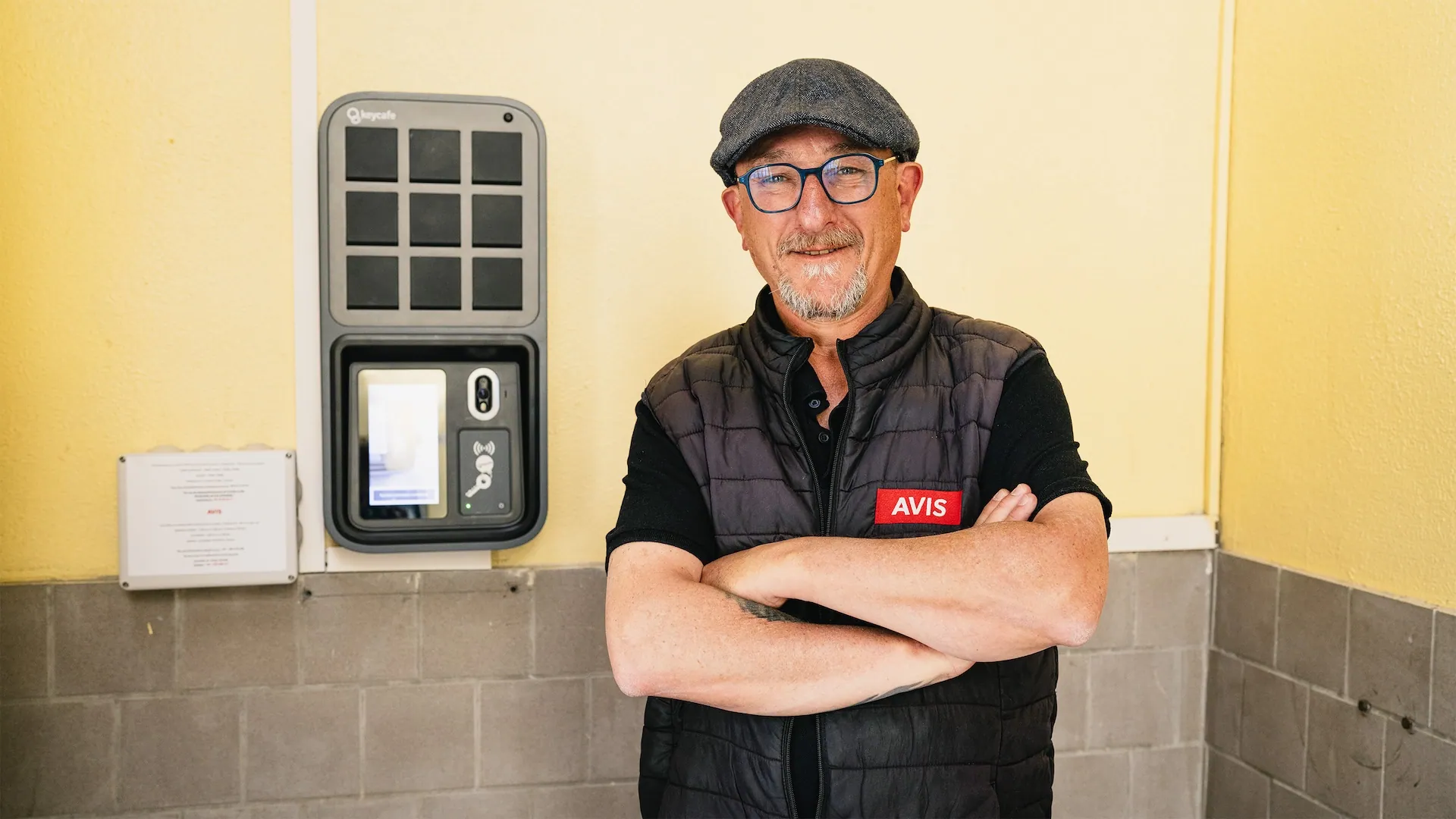
This is the case for ArAvis Location, which transformed its operations by adopting a 24/7 accessible model thanks to an automated key management system like Keycafe.
This transition allowed them to:
offer more flexibility to their customers
increase the number of bookings outside traditional hours
reduce reliance on staff for daily operations
This type of transformation concretely illustrates the benefits of a model without time constraints.
The Benefits of Car Rental Without Time Constraints
The advantages of a 24/7 model extend far beyond simple flexibility. From a commercial standpoint, permanent accessibility makes it possible to capture previously inaccessible demand, particularly late arrivals, early departures, or last-minute bookings. This directly translates into increased revenue opportunities.
Operationally, reducing manual tasks frees up time for teams. They can then focus on higher-value missions, such as fleet management, service improvement, or business development.
In terms of customer experience, the difference is even more striking. A fluid, autonomous, and wait-free experience naturally enhances satisfaction and loyalty. In a highly competitive sector, this element becomes a decisive advantage.
Why Not Evolving Becomes a Risk
As market standards evolve, time constraints are becoming less and less accepted by customers.
What was once perceived as normal is now experienced as a limitation. And this perception directly influences consumer choices.
Businesses that do not evolve their model risk gradually losing attractiveness. They limit their growth potential and offer an experience perceived as less modern than that of their competitors.
Meanwhile, players who adopt flexible and automated models gain a significant advantage by better meeting current expectations.
Companies that stick to a traditional model risk:
losing competitiveness
limiting their growth
offering an experience perceived as outdated
Conversely, those who adopt a flexible model gain a significant lead.
Conclusion: Towards Truly On-Demand Car Rental
Car rental is undergoing a structural transformation. The model based on fixed hours is gradually giving way to an on-demand model, focused on accessibility and flexibility.
Breaking free from time constraints should not be seen as a mere operational optimization, but as a major strategic evolution.
Businesses that succeed in the coming years will be those that have adapted their model to offer a service available at all times, without friction, and entirely customer-centric.


