
Un oficial se presenta a su turno, va a buscar las llaves de un vehículo de patrulla asignado y se da cuenta de que no están. Nadie sabe quién las tiene. Así que el oficial empieza a preguntar, recorre el estacionamiento y usa la radio para localizar el coche. Quince, veinte, treinta minutos más tarde, finalmente salen a la calle.
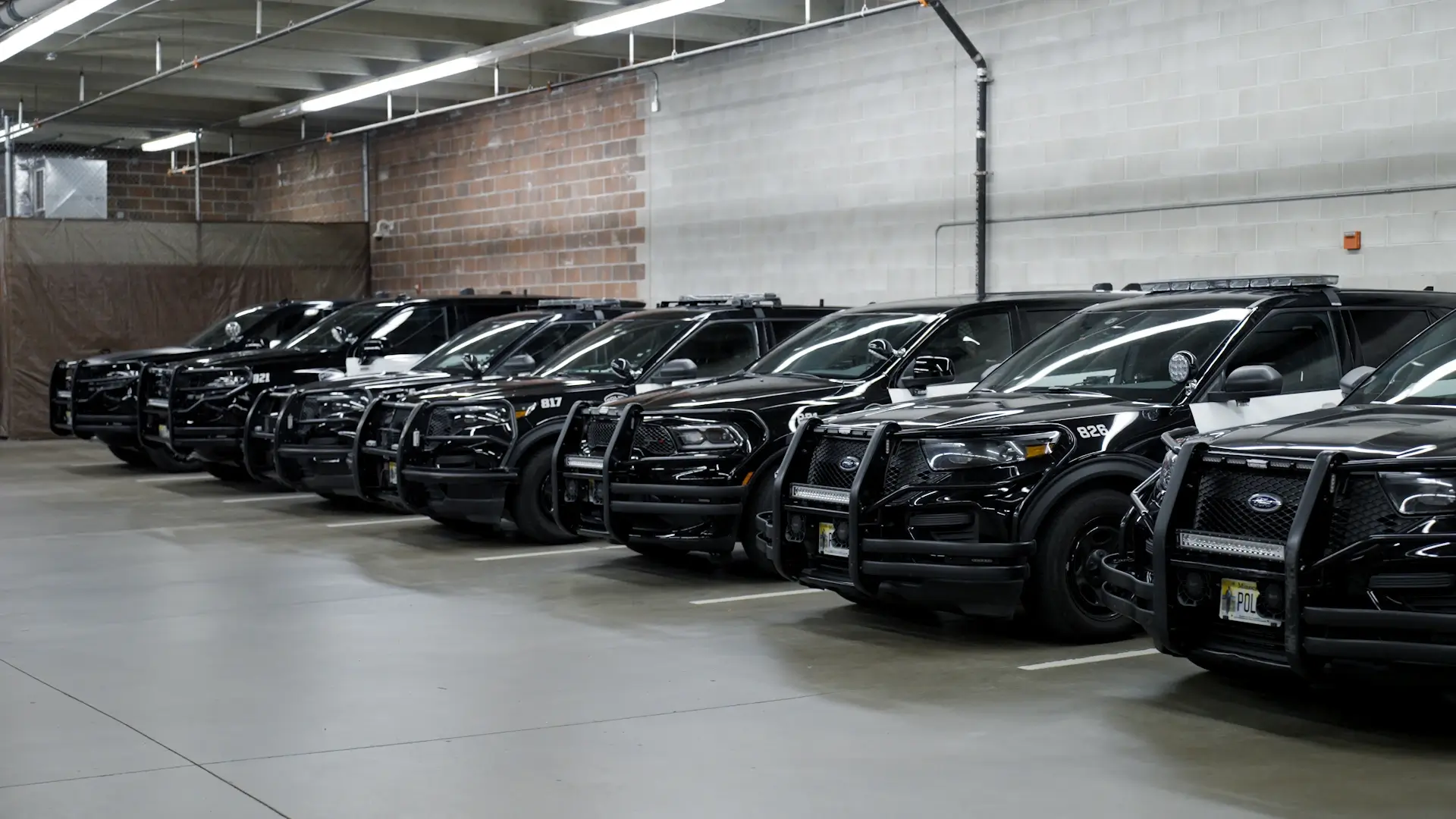
Esto no es un caso aislado. En el Departamento de Policía de Norman en Oklahoma — 180 oficiales y una flota de 34 vehículos de patrulla — era rutinario. Los oficiales perdían regularmente los primeros 15 a 30 minutos de su turno buscando un vehículo que aún estaba con alguien del turno anterior.
Multiplique esos minutos por cada turno, cada oficial, cada año. Ese es el costo real de no saber dónde están sus llaves.
Por qué los registros de salida en papel siempre fallan
Cada departamento tiene alguna forma de control de llaves. El problema es que el sistema más común también es el más fácil de omitir.
El registro en papel es el más extendido y el más frágil, porque depende enteramente de que alguien apurado se detenga a anotar un nombre. En Norman, los oficiales con frecuencia olvidaban firmar el registro. En el Departamento de Policía de Aransas Pass en Texas, el registro existía, pero la mayoría de las veces simplemente se ignoraba.
Cuando la salida de una llave depende de la buena voluntad de un oficial al final de un turno largo, lo que termina en papel nunca refleja lo que realmente les sucedió a las llaves.
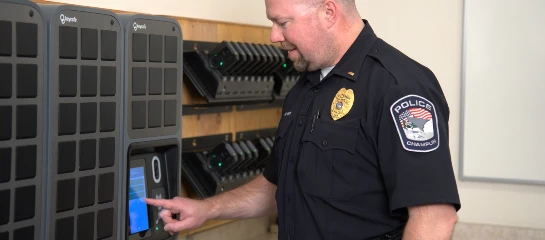
Los buzones de llaves montados en la pared tampoco lo resuelven. En Champlin, Minnesota, el departamento usaba pequeñas cajas con compartimentos que ni siquiera eran lo suficientemente grandes para guardar los fobs de los vehículos de patrulla modernos, y no ofrecían ninguna gestión o seguimiento en línea. El resultado: las llaves desaparecían regularmente, con reemplazos que llegaban a costar hasta $500 por fob.
El costo no es solo el presupuesto
Cuando se habla de control de llaves, la conversación generalmente comienza y termina con dinero. Pero en un entorno de seguridad pública, los costos reales aparecen en otro lugar:
Tiempo operativo. Cada minuto que un oficial dedica a buscar llaves es un minuto que no está en servicio.
Tráfico de radio. En Norman, los oficiales usaban el canal de radio para localizar sus llaves. Ese canal debería estar abierto para llamadas importantes.
Control de acceso. En Aransas Pass, cada llave —junto con las tarjetas de crédito del departamento— estaba disponible para todo el personal, independientemente de su rol. Cuando algo desaparece con esa configuración, no hay forma de reconstruir lo sucedido.
Rendición de cuentas. Si no puede decir quién tuvo qué llave y cuándo, no puede responder a las preguntas difíciles: internas, de auditoría o legales.
Qué cambia con un sistema de gestión inteligente de llaves
Keycafe reemplaza el armario y el portapapeles con un sistema donde el registro no es opcional. Es automático.
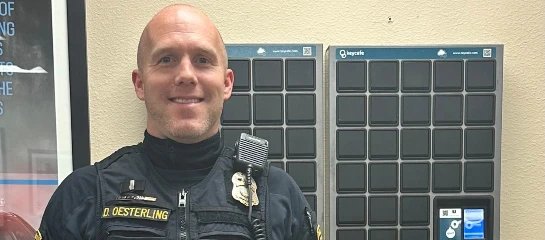
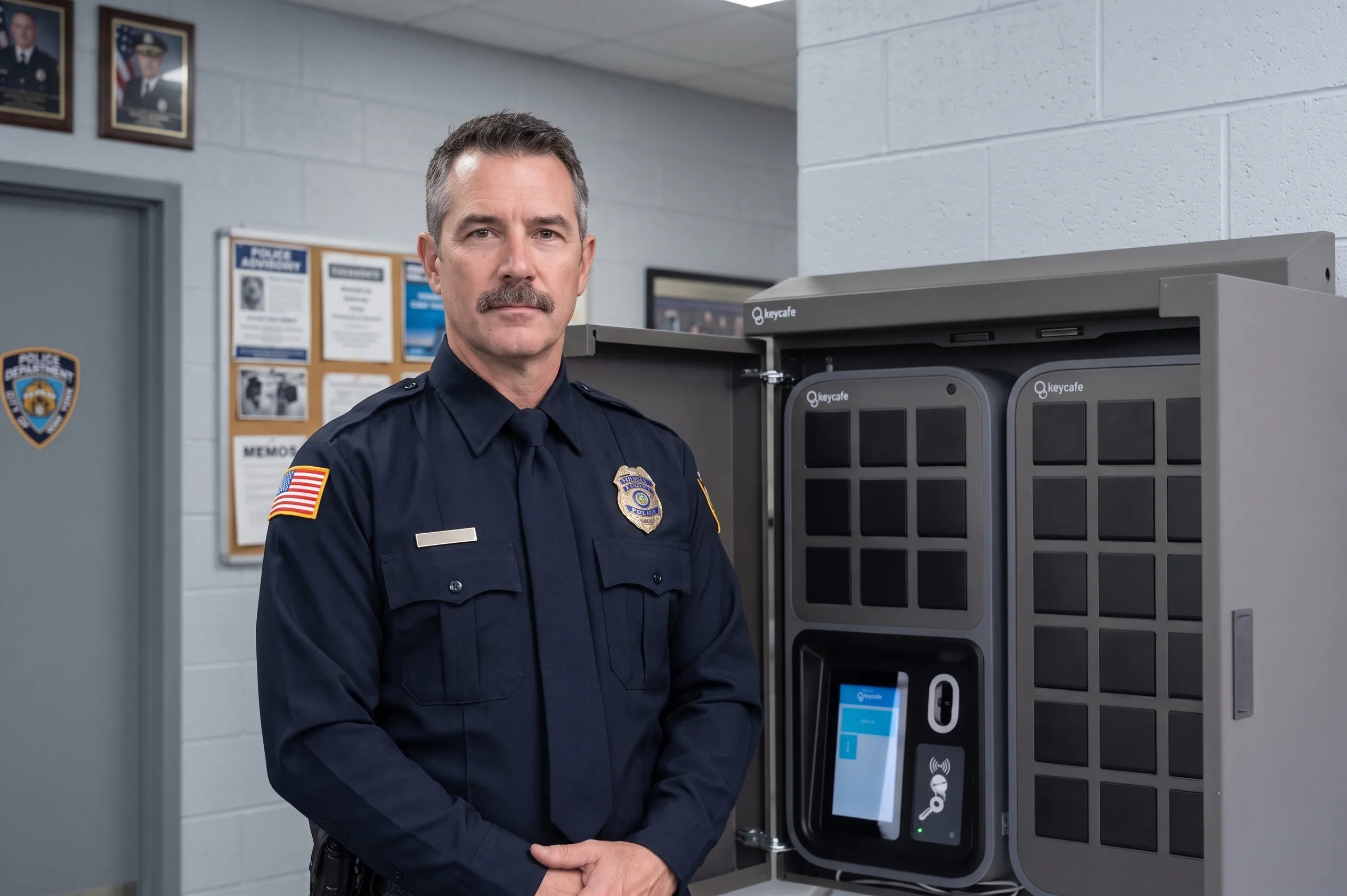
Cada llave se etiqueta con un fob NFC único y se almacena en una SmartBox. Para sacar una, el oficial se autentica en la pantalla de la unidad con un PIN personal — y los departamentos también pueden habilitar un escaneo de credencial, código QR o la aplicación móvil, lo que mejor se adapte a su flujo de trabajo. Ningún oficial tiene que instalar nada en un teléfono personal. El administrador de la cuenta gestiona las llaves, los usuarios y los permisos desde la plataforma web o aplicación de Keycafe.
Ese es el cambio fundamental. Debido a que la autenticación ocurre en la unidad antes de que el compartimento se abra, el registro se crea automáticamente. En Aransas Pass, el registro en papel se ignoraba la mayor parte del tiempo. El digital se crea tanto si el oficial coopera como si no.
A partir de ahí, todo lo demás se desprende:
Cero llaves perdidas. Champlin instaló Keycafe y no ha perdido una sola llave desde entonces. Cuando cada recogida está vinculada a una persona, hora y fecha específicas, las llaves dejan de desaparecer simplemente porque hay una clara rendición de cuentas y un registro que consultar.
Turnos que empiezan a tiempo. Con visibilidad en tiempo real de quién tiene cada llave actualmente, los oficiales entrantes pueden consultar rápidamente el panel de control en lugar de buscar compañeros de trabajo o saturar el canal de radio de despacho.
Permisos por rol, no por confianza. El acceso se define por individuo, grupo y horario. Los supervisores pueden tener acceso separado a llaves específicas —oficinas cerradas, por ejemplo— sin abrir todo el inventario de llaves a todos.
Funciona igual con 32 oficiales que con 180
Uno de los mitos más persistentes es que el control de llaves es un problema solo de grandes departamentos.
Los números dicen lo contrario. Aransas Pass atiende a poco menos de 10,000 residentes con 32 oficiales. Champlin cubre un suburbio de 25,000 habitantes con más de 20 vehículos de patrulla. Norman es la tercera ciudad más grande de Oklahoma, con 120,000 residentes distribuidos en 197 millas cuadradas.
Tres escalas muy diferentes. El mismo problema exacto: llaves sin cadena de custodia. Y la misma solución: Keycafe.
Si su departamento gestiona una flota, llaves de evidencia, llaves de instalaciones o cualquier activo compartido entre turnos, el problema ya existe. La única variable es si tiene los datos para verlo.
Empiece con lo que ya sabe
No necesita una evaluación formal. Solo responda a estas preguntas:
¿Puede decir, ahora mismo, quién tiene cada llave de su flota?
¿Cuántos fobs reemplazó el año pasado?
¿Se rellena su registro de llaves cada vez, o solo cuando alguien se acuerda?
Si alguna de esas respuestas le incomoda, ya ha encontrado el problema.
Hable con nuestro equipo para ver cómo departamentos como el suyo implementaron Keycafe, o lea los estudios de caso completos de Champlin, Norman y Aransas Pass para conocer los resultados detallados.