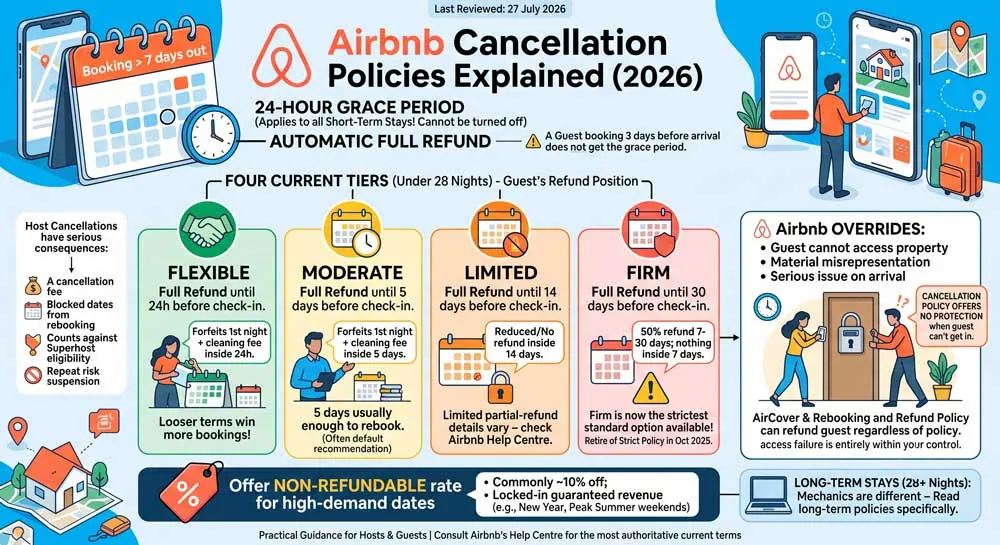

Paskutinį kartą peržiūrėta: 2026 m. liepos 27 d. Tai yra visiškai perrašytas tekstas. Atkreipkite dėmesį, kad šis vadovas apima Los Andželo miestą, o ne platesnę apygardą ir ne atskirus miestus joje.
Trumpoji versija
Tik jūsų pagrindinė gyvenamoji vieta. LA tai apibrėžia kaip namus, kuriuose praleidžiate bent šešis mėnesius per metus. Antrasis būstas nėra jūsų pagrindinė gyvenamoji vieta, net jei jį turite.
120 dienų per kalendorinius metus yra standartinė viršutinė riba.
Extended Home-Sharing leidžia viršyti 120 dienų, taikant papildomus reikalavimus ir daug didesnį mokestį.
LA neskiria apgyvendinimo su šeimininku nuo apgyvendinimo be jo. Galite išnuomoti visą savo būstą, kai esate išvykę iš miesto. Tai neįprasta ir liberaliau nei San Franciske ar Sidnėjuje.
Privalote užsiregistruoti ir nurodyti registracijos numerį arba laukiančios registracijos numerį kiekviename skelbime.
Nuomos stabilizavimo potvarkio (RSO) būstai neturi teisės. Taip pat dauguma ADU, pastatytų 2017 m. sausio 1 d. arba vėliau.
Nuomininkams reikalingas notaro patvirtintas pareiškimas iš nuomotojo.
Saugokite įrašus trejus metus.
Platformos kas mėnesį teikia ataskaitas miestui.
Tai tik Los Andželo miestas. West Hollywood, Santa Monica, Beverly Hills, Culver City, Pasadena, Long Beach ir neinkorporuotos apygardos teritorijos turi savo taisykles.
Home-Sharing potvarkis
Reglamentuojanti taisyklė yra Home-Sharing potvarkis, potvarkis Nr. 185931, kodifikuotas Los Angeles Municipal Code Section 12.22 A.32. Miestas pradėjo priimti paraiškas 2019 m. liepos 1 d. ir vykdymas prasidėjo 2019 m. lapkričio 1 d.
Struktūra yra svarbi. Trumpalaikė nuoma yra draudžiama didžiojoje miesto dalyje, išskyrus tuos atvejus, kai gaunamas sąlyginis naudojimo leidimas (Conditional Use Permit). Home-sharing egzistuoja kaip apibrėžtas pagalbinis naudojimas gyvenamajam naudojimui, galimas ribotomis sąlygomis. Tai yra išimtis, o ne bendras leidimas.
Potvarkis buvo sugriežtintas jo priėmimo metu: Miesto planavimo skyrius rekomendavo 180 dienų limitą, o Miesto taryba jį pakeitė į 120 dienų ir sudėtingesniu patvirtinimo procesu tiems, kurie nori jį viršyti.
Šaltiniai: Los Andželo miesto planavimo skyrius, Kas yra „Home-Sharing“ programa? ir Home-Sharing potvarkio fonas ir DUK (PDF)
Apžvalga
Klausimas | Trumpas atsakymas |
|---|---|
Kieno namai? | Tik jūsų pagrindinė gyvenamoji vieta |
Pagrindinė gyvenamoji vieta reiškia | Buvimą bent šešis mėnesius per metus |
Standartinė viršutinė riba | 120 dienų per kalendorinius metus |
Viršijus 120 dienų | Reikalinga „Extended Home-Sharing“ registracija |
Su šeimininku ar be šeimininko | Miestas neskiria |
Registracijos numeris skelbimuose? | Taip, visuose |
Ar RSO būstai turi teisę? | Ne |
Ar ADU turi teisę? | Paprastai ne, jei pastatyti 2017 m. sausio 1 d. arba vėliau |
Nuomojatės kaip nuomininkas? | Taip, su notaro patvirtintu nuomotojo pareiškimu |
Įrašų saugojimas | Treji metai |
Pagrindinės gyvenamosios vietos reikalavimas
Galite dalytis namais tik toje gyvenamojoje vietoje, kurioje faktiškai gyvenate, o LA testas yra buvimas bent šešis mėnesius per metus. Pagrindinės gyvenamosios vietos įrodymas vertinamas registracijos metu ir gali būti peržiūrėtas vėliau.
Miestas aiškiai įspėja apie spąstus: jei turite du būstus, antrasis būstas nėra jūsų pagrindinė gyvenamoji vieta, net jei jį turite. Viena pagrindinė gyvenamoji vieta, viena registracija.
Nuomininkai gali dalyvauti, tačiau jums reikės notaro patvirtinto nekilnojamojo turto savininko ar nuomotojo pasirašyto pareiškimo, leidžiančio jums dalyvauti. Surinkite tai prieš pradėdami pildyti paraišką.
Ką iš tikrųjų apima 120 dienų
Nė vienas asmuo negali vykdyti „home-sharing“ veiklą ilgiau nei 120 dienų per kalendorinius metus savo pagrindinėje gyvenamojoje vietoje, nebent Miestas yra išdavęs „Extended Home-Sharing“ registraciją.
Du punktai, skiriantys LA nuo kitų šios serijos miestų:
LA neskiria apgyvendinimo su šeimininku nuo apgyvendinimo be jo. Miestas patvirtina, kad šeimininkas gali išnuomoti visą savo namus, kai yra išvykęs iš miesto. Nėra reikalavimo būti vietoje ir nėra atskiros visų namų nuomos ribos. Kaip panaudosite savo 120 dienų, priklauso tik nuo jūsų.
Riba taikoma dienoms, o ne rezervacijoms. Stebėkite bendrai visose platformose ir bet kokius tiesioginius užsakymus.
Extended Home-Sharing
Norint viršyti 120 dienų, jums reikės Extended Home-Sharing registracijos, o reikalavimai yra žymiai aukštesni.
Reikalavimai apima turėtą galiojančią „home-sharing“ registraciją bent šešis mėnesius (arba vykdžius nuomą panašų laikotarpį iki potvarkio įsigaliojimo), kartu su standartiniais atitikties kriterijais.
Mokesčiai smarkiai išauga. Standartinė „home-sharing“ registracija arba atnaujinimas kainuoja $89. „Extended Home-Sharing“ taikomas papildomas $850 peržiūros mokestis. Jei paraiškai reikalinga papildoma diskrecinė peržiūra, mokestis yra $5,660.
Nuobaudos jus diskvalifikuoja. Jei šeimininkui per pastaruosius trejus metus buvo paskirta daugiau nei viena nuobauda, paraiška perduodama diskrecinei peržiūrai Miesto planavimo departamente. Trikdymo pažeidimai diskvalifikuoja šeimininkus nuo išplėstinio „home-sharing“.
Mokesčiai nustatomi potvarkiu ir yra peržiūrimi. Prieš planuodami biudžetą, patvirtinkite dabartines sumas su Miesto planavimo skyriumi.
Šaltinis: Los Andželo miesto planavimo skyrius, Home-Sharing potvarkio DUK (PDF)
Neregistruotinos nuosavybės
Čia daugelis LA planų žlunga, todėl patikrinkite prieš įsipareigodami.
Nuomos stabilizavimo potvarkio (RSO) būstai neturi teisės. LA turi labai didelį RSO būstų fondą, ir daugelis savininkų nesuvokia, kad jų pastatas patenka į šią kategoriją. Patikrinkite turto RSO statusą tiesiogiai.
ADU, pastatyti 2017 m. sausio 1 d. arba vėliau, gali būti naudojami „home-sharing“ tik tuo atveju, jei ADU yra šeimininko pagrindinė gyvenamoji vieta. Garažo pertvarkymas trumpalaikei nuomai netinka.
Iš nuomojamojo būsto paversti vienetai turi apribojimų; potvarkyje nurodomas penkerių metų laikotarpis po pertvarkymo, per kurį „home-sharing“ negalimas.
Be potvarkio, HOA taisyklės, daugiabučių dokumentai ir nuomos sutartys gali drausti šią veiklą, nepriklausomai nuo jūsų registracijos.
Reklama, įrašai ir platformų ataskaitos
Kiekviename skelbime turi būti nurodytas Miesto išduotas „Home-Sharing“ registracijos numeris arba laukiančios registracijos statuso numeris. Skelbimas be jo yra draudžiamas ir gali užtraukti baudą.
Privalote saugoti ir išsaugoti įrašus trejus metus, įskaitant kiekvieno „home-sharing“ viešnagės skaičių ir trukmę bei už kiekvieną sumokėtą kainą. Tai yra įrašai, kuriuos Miestas naudoja nustatydamas jūsų mokesčių prievolę, todėl jie turi būti tikslūs, o ne apytiksliai.
Platformos kas mėnesį teikia ataskaitas apie jus. Apgyvendinimo platformos privalo bent kas mėnesį teikti Miesto planavimo departamentui elektroninį žurnalą, kuriame nurodomas kiekvieno skelbimo „home-sharing“ registracijos numeris ir jį paskelbusio asmens vardas. Jūsų duomenys ir platformos duomenys bus lyginami.
Atnaujinimas yra kasmetinis, o Miesto planavimo skyrius rekomenduoja kreiptis bent 30 dienų iki galiojimo pabaigos. Atnaujinant reikia atskleisti visus pokyčius nuo ankstesnės paraiškos ir pridėti „home-sharing“ įrašus.
Apeliacijos yra nagrinėjamos Teritorijos planavimo komisijos.
Mokesčiai
„Home-sharing“ registracijos sistema skirta palengvinti registraciją Laikinojo apgyvendinimo mokesčiui (Transient Occupancy Tax), kurį administruoja Finansų biuras. LA TOT tarifas plačiai skelbiamas kaip 14%, tačiau patvirtinkite dabartinį tarifą ir savo deklaravimo prievoles tiesiogiai Finansų biure.
Jei platforma turi TOT surinkimo sutartį su Finansų biuru, ji gali surinkti mokesčius jūsų vardu, o platformos gali sudaryti platformos sutartį su Miestu. Raštu patvirtinkite, kokius mokesčius jūsų platforma perveda ir kurie lieka jūsų, ir atminkite, kad jūsų trijų metų įrašų saugojimo prievolė egzistuoja būtent tam, kad Miestas galėtų patikrinti.
Tai yra tik Los Andželo miestas
Verta aiškiai pasakyti, nes „Los Andželas“ vartojamas laisvai, o pasekmės yra realios.
„Home-Sharing“ potvarkis galioja Los Andželo mieste. Jis netaikomas West Hollywood, Santa Monica, Beverly Hills, Culver City, Burbank, Pasadena ar Long Beach, kurių kiekvienas yra atskiras miestas su savo taisyklėmis, nei neinkorporuotoje Los Andželo apygardoje, kurią valdo apygarda.
Geografiškai tvarkingai atrodantis portfelis gali apimti keturis reguliavimo režimus. Patikrinkite kiekvieno konkretaus adreso jurisdikciją.
Praktinis kontrolinis sąrašas
Patvirtinkite, kad nuosavybė yra jūsų pagrindinė gyvenamoji vieta ir kad joje praleidžiate bent šešis mėnesius per metus
Patikrinkite, ar būstas patenka į RSO taikymo sritį. Jei taip, sustokite
Jei tai yra ADU, patikrinkite statybos datą ir ar tai yra jūsų pagrindinė gyvenamoji vieta
Jei nuomojatės, gaukite notaro patvirtintą pareiškimą iš savo nuomotojo
Patikrinkite HOA, daugiabučių namų ar nuomos apribojimus
Patvirtinkite, kad nuosavybė yra Los Andželo mieste ir nėra atskirame mieste ar neinkorporuotoje apygardoje
Užsiregistruokite Miesto planavimo skyriuje, naudokite nekilnojamojo turto valdymo programinę įrangą atitikties stebėjimui ir nurodykite numerį kiekviename skelbime.
Užsiregistruokite Laikinojo apgyvendinimo mokesčiui (Transient Occupancy Tax) Finansų biure
Stebėkite dienas bendrai visose platformose, atsižvelgdami į 120 dienų ribą
Jei jums reikia daugiau, realiai suplanuokite biudžetą Extended Home-Sharing ir patikrinkite savo nuobaudų istoriją
Nustatykite trijų metų įrašų saugojimą, apimantį viešnagių trukmę ir kainas
Įrašykite atnaujinimą bent 30 dienų iki galiojimo pabaigos
Patvirtinti oficialūs šaltiniai
Paminėti, bet nesusieti
Ordinance No. 185931, Home-Sharing potvarkis
Los Angeles Municipal Code Section 12.22 A.32
City of Los Angeles Office of Finance, dėl Laikinojo apgyvendinimo mokesčio (Transient Occupancy Tax) registracijos ir dabartinių tarifų
Los Angeles Housing Department, dėl RSO statuso
Atskiri West Hollywood, Santa Monica, Beverly Hills, Culver City, Burbank, Pasadena ir Long Beach potvarkiai
Los Angeles County, dėl neinkorporuotų teritorijų
Jūsų HOA dokumentai ar nuomos sutartis
Svarbus atsakomybės apribojimas
Šis straipsnis nėra teisinis, mokesčių ar finansinis patarimas. Tai yra bendra informacija, parašyta ne specialistui, rašyta raktų valdymo įmonės, o ne advokatų kontoros.
Šis vadovas apima tik Los Andželo miestą. Kaimyniniai miestai ir neinkorporuotos apygardos teritorijos turi savo taisykles, o kai kurios visiškai draudžia trumpalaikę nuomą gyvenamuosiuose rajonuose. Mokesčiai nustatomi potvarkiu ir keičiasi. RSO statusas ir ADU statybos datos nustato tinkamumą ir yra susiję su konkrečia nuosavybe. Platformos kas mėnesį teikia ataskaitas apie jūsų veiklą miestui, todėl tikslumas yra svarbus. HOA dokumentai ir nuomos sutartys gali drausti šią veiklą, nepriklausomai nuo registracijos.
Prieš veikdami, pasitikrinkite su LA miesto planavimo skyriumi ir Finansų biuru dėl savo konkretaus adreso. Dėl pirkimo, RSO klausimo ar „Extended Home-Sharing“ paraiškos pasikonsultuokite su Kalifornijos advokatu.
Jei pastebėjote klaidą, praleidimą ar tai, ką reikia atnaujinti, praneškite mums ir mes tai ištaisysime.