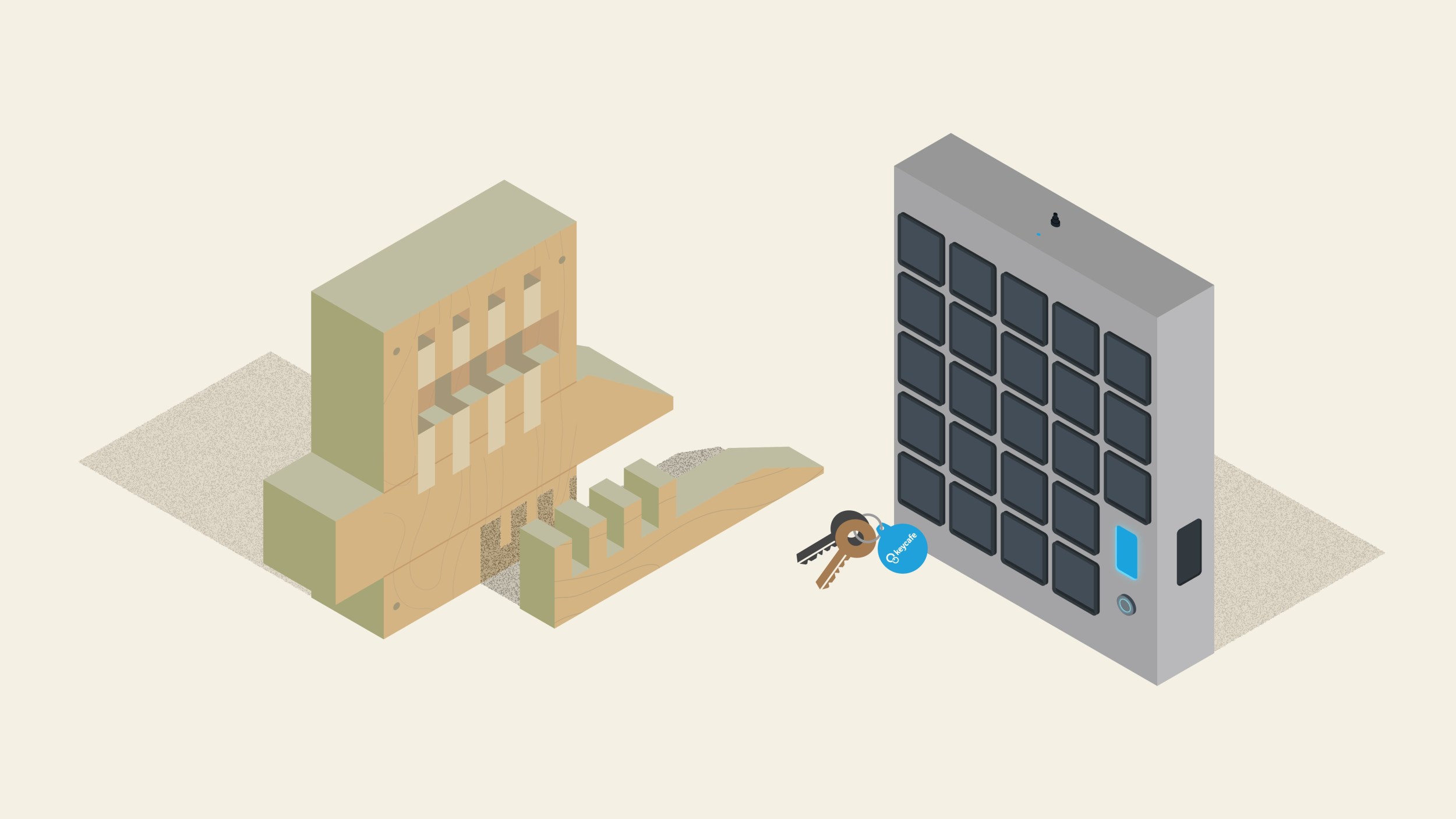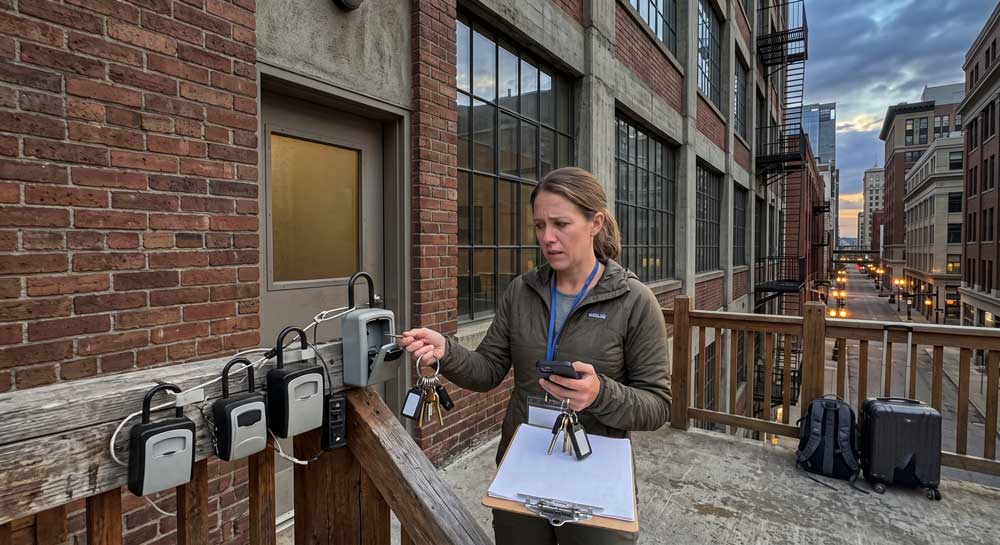

Uma caixa de chaves é uma boa resposta para uma pequena pergunta: como uma pessoa obtém uma chave para uma propriedade quando você não está lá?
Os gestores de propriedades não estão a responder a essa pergunta. Estão a responder a uma diferente: como sessenta pessoas obtêm acesso a catorze propriedades, em horários diferentes, com rotatividade de pessoal, hóspedes a cada poucas noites, e a exigência de saber posteriormente quem foi onde.
Uma caixa de chaves não pode responder a isso, e a razão é estrutural, em vez de ser uma questão de comprar uma caixa melhor.
O ponto de rutura são as pessoas, não as propriedades
Os gestores geralmente assumem que o limiar é o número de propriedades. Não é. É o número de pessoas que detêm os seus códigos e a taxa de mudança desse conjunto.
Uma propriedade com dois detentores de chaves de confiança é uma situação de caixa de chaves, confortavelmente.
Catorze propriedades com três empresas de limpeza, um conjunto rotativo de profissionais, dois coanfitriões, um agente de arrendamento e um hóspede a cada quatro noites é um problema de permissões. O conjunto de pessoas com acesso muda semanalmente, e uma caixa mecânica não tem conceito de pessoa.
Um rápido auto-teste. Se não conseguir responder a ambas as perguntas imediatamente, cruzou a linha:
- Quem conhece atualmente o código da unidade 7?
- Quem entrou na unidade 3 na última terça-feira?
O que realmente corre mal à escala de portfólio
Os códigos tornam-se permanentes
Alterar o código de uma caixa de chaves significa visitar a propriedade, abrir a caixa, repor o mecanismo e notificar todos os que precisam do novo número. Em catorze propriedades, isso é um dia de trabalho.
Por isso, não acontece. O código definido em 2023 ainda está ativo. Cada empregado de limpeza que alguma vez trabalhou para si, cada empreiteiro, cada coanfitrião que partiu e um número desconhecido de antigos hóspedes ainda detêm credenciais atuais. Não pode revogar o acesso porque não há nada para revogar.
Um código, muitas pessoas, sem distinções
Um único código não pode dar ao empregado de limpeza as manhãs de terça-feira, ao canalizador uma janela de quinta-feira à tarde e ao hóspede quatro noites. Todos os que têm o número têm acesso permanente e irrestrito, e o único controlo disponível é não informar as pessoas.
As chaves viajam
Os hóspedes levam as chaves para casa. Os empregados de limpeza transportam-nas entre propriedades. As chaves acabam no bolso de um casaco pela cidade. Como não há registo do conteúdo da caixa, descobre quando o próximo hóspede está à porta.
Cada falha torna-se uma deslocação
Um código errado, um seletor encravado, uma chave não devolvida, um empreiteiro a chegar num dia não planeado. Cada um torna-se alguém num veículo. Num portfólio, isso não é um inconveniente ocasional; é uma linha permanente na sua base de custos e escala linearmente com o número de propriedades.
O registo não existe quando precisa dele
As situações em que um gestor precisa de saber exatamente quem entrou numa propriedade são totalmente previsíveis: disputas por danos, discussões de caução, reclamações de seguros, alegações de ocupação não autorizada, itens em falta, reclamações de vizinhos e do edifício. Cada uma depende de uma questão de facto sobre o acesso, e uma caixa de chaves não tem resposta.
Cada vez mais, as regras exigem
Isto mudou materialmente nos últimos dois anos e afeta muitos portfólios geridos.
A Itália exige a identificação e comunicação dos hóspedes à polícia no prazo de 24 horas, e Roma, Florença e Milão têm estado a remover caixas de chaves de propriedade pública. A Espanha exige a submissão de dados dos hóspedes no prazo de 24 horas. Amesterdão executa um algoritmo que cruza listas com registos de população e edifícios, e os tribunais holandeses têm considerado que as próprias capturas de ecrã de um anfitrião não constituem prova. Nova Gales do Sul pode excluir um anfitrião ou um hóspede da indústria por cinco anos por violação de conduta.
Um código partilhado de quatro dígitos não identifica ninguém. Para um gestor que opera em qualquer um desses mercados, isso é uma exposição à conformidade, e não um inconveniente.
O que o substitui
A mudança é conceptual antes de ser física: o acesso deixa de ser um número anexado a uma propriedade e torna-se uma permissão anexada a uma pessoa por um período de tempo.
Na prática, para um portfólio gerido:
Credenciais por pessoa. Cada hóspede, empregado de limpeza, empreiteiro, coanfitrião e membro da equipa tem a sua própria, entregue como um código, um QR, um toque NFC ou um passe de carteira. Equipas que trabalham com vários clientes não precisam de outra aplicação.
Janelas que expiram. Um hóspede tem acesso desde o check-in até ao check-out. Um empregado de limpeza tem acesso recorrente às manhãs de terça e sexta-feira. Um eletricista tem acesso na quinta-feira entre as dez e as doze. Nada precisa de ser cancelado porque nada persiste.
Revogação instantânea. Um empregado de limpeza deixa a empresa e o seu acesso termina nessa tarde, em todas as propriedades, sem visitar nenhuma delas.
Um registo completo. Cada recolha e devolução, nomeada e com carimbo de data/hora, exportável.
Chaves que permanecem no lugar. As chaves ficam no armário entre entregas, em vez de circularem nos bolsos, para que as não-devoluções sejam visíveis imediatamente, em vez de no próximo check-in.
Implementação para um portfólio gerido
A questão prática é quantas instalações precisa, e a resposta depende da geografia, em vez do número de propriedades.
Portfólios densos e acessíveis a pé frequentemente operam a partir de um único ponto. A capacidade começa com 9 posições de chaves e cresce através de módulos de expansão encadeados, pelo que uma instalação bem localizada pode guardar chaves para dezenas de unidades.
Portfólios dispersos funcionam melhor com um ponto por grupo, para que hóspedes, empregados de limpeza e empreiteiros estejam sempre a recolher perto de onde estão a trabalhar.
Portfólios ao nível do edifício colocam a instalação dentro do próprio edifício, cobrindo todas as unidades que gere lá.
Onde não controla uma parede, os gestores instalam comummente no seu próprio escritório ou num pequeno espaço arrendado, em vez de negociarem com várias associações de edifícios.
No lado do software, as plataformas que a maioria dos gestores já utiliza conectam-se diretamente, incluindo Airbnb, Guesty, Hostaway e Res:harmonics, com uma API por trás delas. As credenciais são enviadas automaticamente quando uma reserva é confirmada, em vez de alguém se lembrar de enviar uma mensagem às 23h.
A comparação honesta
Não vamos dizer que as caixas de chaves são inúteis. Para uma única propriedade com um par de detentores de chaves de confiança, uma é genuinamente boa e mais barata.
O caso para mudar é específico: tem mais pessoas do que pode rastrear, os seus códigos não mudaram em um ano, a sua equipa está a deslocar-se às propriedades para lidar com as chaves, e não conseguiria provar quem entrou numa unidade se lhe fosse perguntado.
Se nada disso o descreve, mantenha a caixa.
Se tudo isso o descreve, o custo que já está a suportar em tempo de pessoal, deslocações, disputas e reservas perdidas é quase certamente maior do que a solução.
Veja como funciona ou fale com a nossa equipa sobre uma configuração de portfólio.
Os detalhes regulatórios refletem informações publicamente disponíveis no momento da escrita e são fornecidos apenas para orientação geral. As regras sobre identificação de hóspedes, relatórios e dispositivos de armazenamento de chaves diferem por jurisdição e mudam frequentemente. Confirme os requisitos atuais localmente.