
Misplaced fleet keys might seem like a minor inconvenience, but the financial reality tells a different story. Replacing just one lost vehicle key typically costs between $500 and $1,500, not including the downtime for drivers and assets when a key is missing. Multiply that across a fleet of dozens or hundreds of vehicles and the exposure becomes significant.
For fleet managers already using,or actively evaluating, an electronic key management system, 2026 is an ideal time to tighten protocols and extract maximum value from your investment. Whether you're managing a local delivery fleet or a multi-site transport operation, the following ten best practices will help you reduce risk, improve accountability, and keep vehicles moving.
1. Centralize Key Storage in a Smart, Secure Location
The foundation of any effective fleet key control strategy is knowing exactly where every key is at all times. A centralized, cloud-connected key locker eliminates the guesswork and removes the reliance on manual sign-out sheets or pegboards.
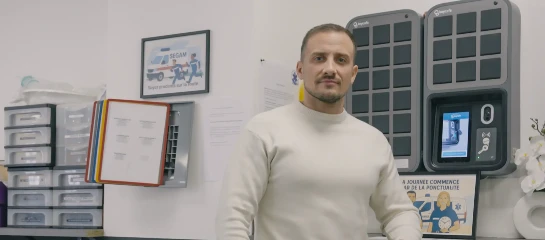
Keycafe's IoT-connected SmartBoxes allow drivers and staff to securely retrieve keys at any time without manager oversight, using a single PIN to access keys with no need to update codes when permissions change. Every SmartBox functions as a clear hub for the start and end of every shift, no ambiguity about where an unused key belongs.
2. Replace Manual Logs with Automated Digital Tracking
Many fleets still rely on manual key management methods like pegboards, lockboxes, or simple sign-out sheets, practices that often lead to lost keys, security concerns, and operational delays. These systems are also prone to human error and are frequently neglected during busy periods.
Keycafe logs all key activity with timestamps and user IDs, giving managers complete oversight and audit trails. Every pickup and return is recorded automatically in real time, no manual entry required.
3. Enforce Individual Driver Accountability
Shared access codes are one of the most common weak points in fleet key control. When a group PIN is used, tracing a specific key movement to a specific driver becomes impossible.
With Keycafe, drivers pick up and drop off their permitted keys using a unique PIN code, ensuring the right driver gets the right vehicle, every time with no on-site supervision required. Every key access is recorded, providing a detailed audit trail. This individual-level accountability is a significant step up from group-based access systems.
4. Train Your Team and Keep It Simple
The best technology only works if your team uses it consistently. Onboarding resistance is one of the most common reasons digital key management systems underperform in their first months.
A short, 10-minute hands-on session with a quick-start card posted at the locker is sufficient for most teams. Keycafe is designed with this in mind: its modern, intuitive design makes it suitable for all types of staff without extensive training, as well as customer-facing applications
5. Use Consistent Key Labeling and Naming Conventions
In fleets with similar vehicles, particularly those with multiple makes of the same model, key confusion can cause costly delays. Consistent labeling, whether by vehicle ID, plate number, or route assignment, prevents drivers from picking up the wrong key.
Keycafe's dashboard allows you to manage your entire fleet's keys from one central view, or create groups based on locations and routes, with real-time key statuses for maximum fleet efficiency. Using a standardized naming convention within the software means any key can be located in seconds.
6. Set Role-Based and Time-Restricted Access Controls
Not every driver needs access to every vehicle. Providing blanket access across a fleet creates unnecessary liability and makes audits harder to interpret.
Keycafe allows managers to set role-based permissions, create time-restricted access, and issue one-time-use codes for visiting staff or contractors. Expanded API coverage also adds endpoints for logs, reservations, and group permissions, allowing companies to tie key access into HR, building, or fleet management systems. Access can be granted or revoked remotely, in real time, from any device.
7. Secure Spare Keys With Controlled Access
Spare keys represent a significant gap in many fleet key control systems. Without proper controls, spares can be duplicated, misused, or go missing without triggering any alert.
Keycafe's modular SmartBox system means each key has its own compartment with individual access codes granted at the user level. Spare keys can be stored in a separate SmartBox with restricted access limited to managers or designated staff only, and every access attempt is logged automatically.
8. Conduct Regular Audits Using Exportable Data
Periodic audits are the only reliable way to surface overdue returns, access anomalies, or patterns of unauthorized use before they become expensive problems.
Many key management systems include data exports that make the audit process easier. Keycafe's cloud-based dashboard gives managers access to a full history of key transactions, filterable by user, vehicle, location, and time, making compliance reporting and internal audits significantly faster to complete.
9. Activate Real-Time Alerts and Overdue Notifications
Reactive key management , finding out about a missing key after a driver fails to show up for a shift, is a costly approach. Modern systems allow you to get ahead of incidents rather than respond to them.
Keycafe lets managers set up notifications for real-time tracking as keys are picked up and returned, with immediate alerts if keys are not returned on time after a shift. These notifications can be delivered by email or push notification, ensuring nothing slips through unnoticed.
10. Build a Contingency Plan for Lost or Inaccessible Keys
Even with robust controls, edge cases arise, power outages, network disruptions, or hardware issues. Fleet operations cannot afford to be locked out of their own vehicles.
Keycafe's MS5 and MS4 SmartBoxes include a 3,500 mAh Li-ion battery backup system. When unplugged or during a power loss, SmartBoxes can perform 50–100 key pickups or drop-offs before entering hibernation mode to conserve power. A major advantage is Keycafe's offline mode, which allows the SmartBox to function as normal even without an internet connection, users won't notice when the system is offline, and operations continue without interruption. Pre-downloaded offline codes provide a final failsafe for complete outage scenarios.
Integrate Keycafe Into Your Existing Fleet Tech Stack
Strong key control doesn't operate in isolation. In 2026, the most effective fleet management operations connect their key management system directly to the software they already use.
Keycafe is available on Zapier, enabling automated key access creation based on events in thousands of popular apps. When a trigger occurs — such as a new driver assignment, form submission, or CRM update — Zapier creates a key booking in Keycafe, generating a unique key access code for secure pickup at a SmartBox. Zapier integration connects Keycafe to over 7,000 apps, automating tasks such as notifications, reporting, and workflow triggers.
For trucking and logistics operators, Keycafe has a direct integration with fleet management software Fleetio, and an open API that allows system integrators to fully integrate Keycafe into their existing driver assignment workflows.
For a mid-size municipal fleet using Keycafe lockers across 20 vehicles, combined savings from avoided key replacements, reclaimed admin labor, and reduced downtime allowed the system to pay for itself in under 12 months.
Ready to see how Keycafe can work for your fleet? Request a demo or configure your system directly at keycafe.com.