
Independent and seasonal boutique hotels with 10 to 60 rooms rarely run a 24-hour front desk, often closing reception between 8:00 PM and 10:00 PM. When a guest’s flight lands late or highway traffic stalls an evening drive, a delayed arrival turns into a recurring hotel key management dilemma. Without an overnight clerk, small operators usually rely on three informal workarounds: paying someone to stay up late, leaving a room key in an envelope at reception or inside an unlocked room, or asking an off-duty manager to drive back to the property for a single handoff.
Why Late Arrivals Are Costly for Small Properties
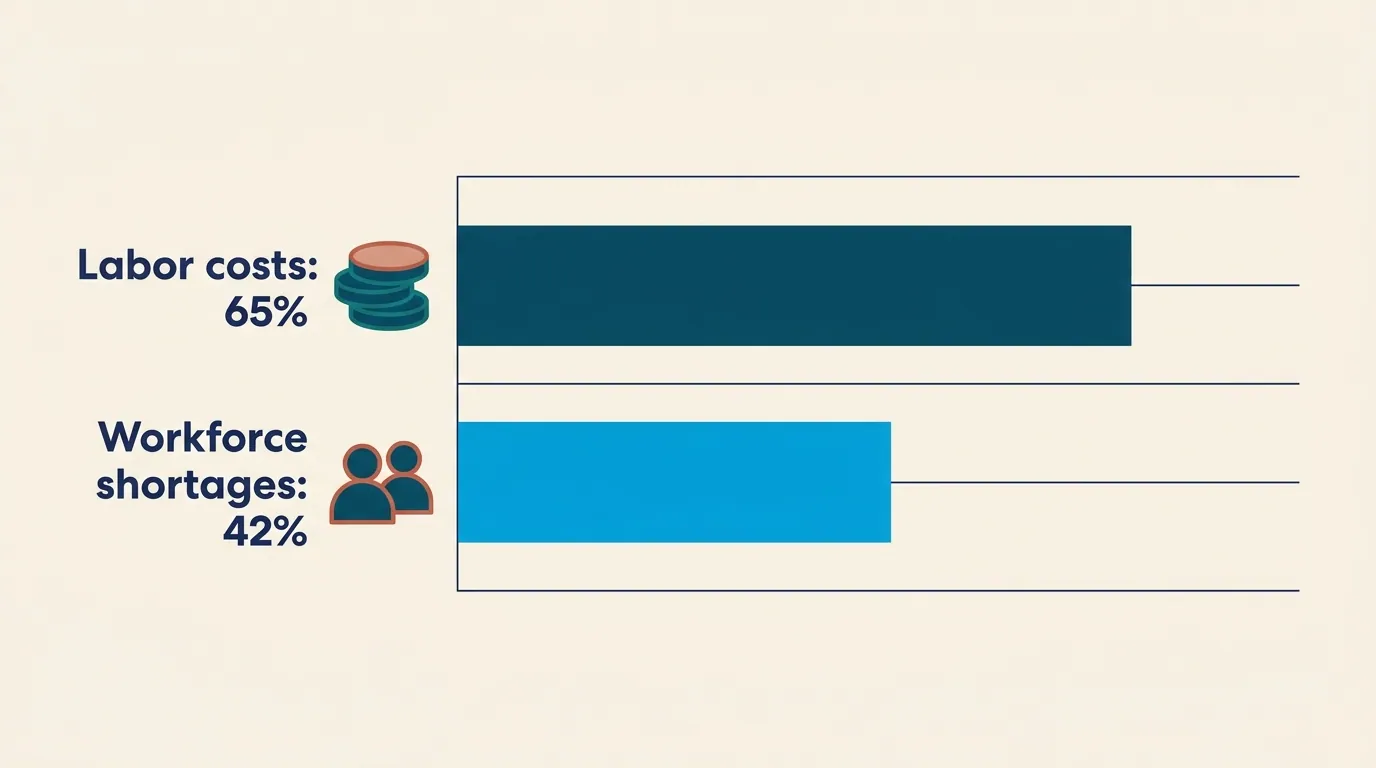
Staffing pressures across the United States and Canada make overnight desk coverage difficult to sustain for smaller lodging businesses. According to an American Hotel and Lodging Association (AHLA) survey, more than half of U.S. hotels remain somewhat or severely understaffed, with 65% citing labor costs and 42% citing workforce shortages as top financial pressures. An earlier AHLA and Hireology survey found 65% of surveyed U.S. properties faced staffing shortages, with front desk roles (26%) ranking as the second-hardest position to fill behind housekeeping (38%).
Even when budgets allow higher hourly pay, overnight desk shifts are hard to fill and retain. U.S. Bureau of Labor Statistics data cited in hospitality staffing analyses shows that 69.1% of hotel and resort desk clerk jobs require variable work schedules and 27.7% operate without a supervisor in the immediate work area. Traditionally, a night auditor covered late arrivals while reconciling receipts, batching credit cards, and rolling over the property management system (PMS) date between 2:00 AM and 3:00 AM. Cloud-based PMS platforms now automate that daily financial rollover, leaving little operational reason for a 25-room inn to pay an overnight wage just to hand out two late keys.
Restricting evening check-ins carries a direct revenue penalty as well. Closing reception early forces small hotels to cut off late-day online bookings during shoulder seasons or turn away travelers arriving on late flights. At the same time, arrival friction affects guest scores: industry survey data reports that guest satisfaction drops by 50% after a 5-minute wait at check-in, whereas properties offering mobile check-in report up to 23% higher satisfaction rates than traditional front desks alone.
Where Usual After-Hours Workarounds Fall Short
When hiring an overnight clerk is out of reach, small hotels typically cycle through the same manual fixes. Each approach solves one scheduling headache while creating another operational risk.

Asking staff or owners to stay up late
Keeping an employee past reception hours triggers overtime wages and schedule fatigue. When owners or live-in managers cover late arrivals themselves, an unexpected midnight delay interrupts rest and cuts into next-day operations.
Driving back in for a late handoff
Relying on an off-duty manager to commute back to the hotel for a single guest arrival turns a routine check-in into an unpredictable errand. Any delay on the road leaves tired travelers waiting outside a locked lobby.
Leaving keys in an envelope or an unlocked room
Placing a labeled key in an envelope at an unstaffed desk or leaving a guest room unlocked removes the labor cost, yet it removes security and verification at the same time. There is no record of who picked up the key, no guarantee the person entering the building matches the reservation, and immediate liability if a guest finds the wrong key or an open door.
Sharing static lockboxes or replacing every door lock
Many lower-tech inns turn to physical combination lockboxes paired with an on-call manager. Unless staff remember to reset the combination after every stay, former guests retain the code, and mechanical dials can jam or frustrate tired travelers in poor lighting. Going to the opposite extreme by retrofitting every guest door with smart locks introduces high upfront hardware expenses, compatibility issues on older wood or historic doors, and ongoing reliance on guests keeping their smartphones charged and messaging apps working.
How Smart Hotel Key Management Replaces Late-Night Workarounds
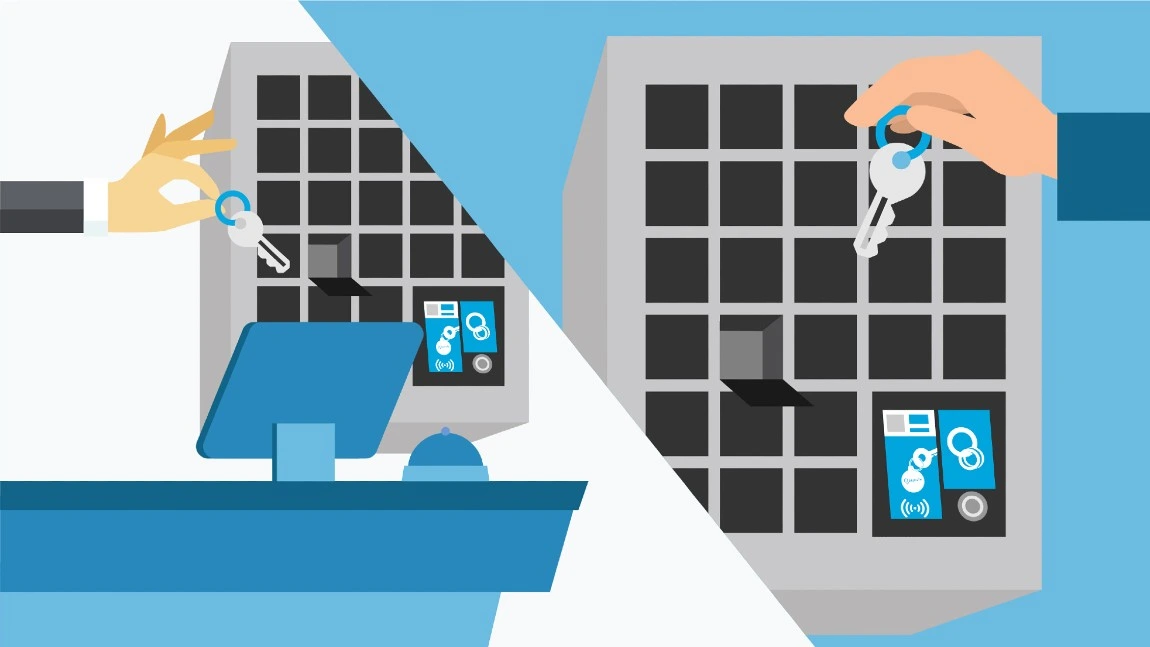
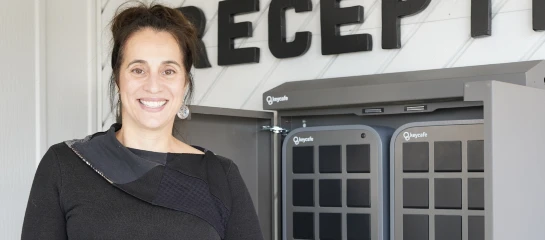
Independent properties that want 24/7 arrival flexibility without replacing every door lock often use an automated key locker such as the Keycafe MS5 SmartBox. Instead of mounting electronic locks on 15 to 60 doors, the hotel places a single cloud-connected locker in a lobby, vestibule, or exterior entryway. Each physical room key sits inside its own individually locked bin, and the system records pickups and returns in real time.
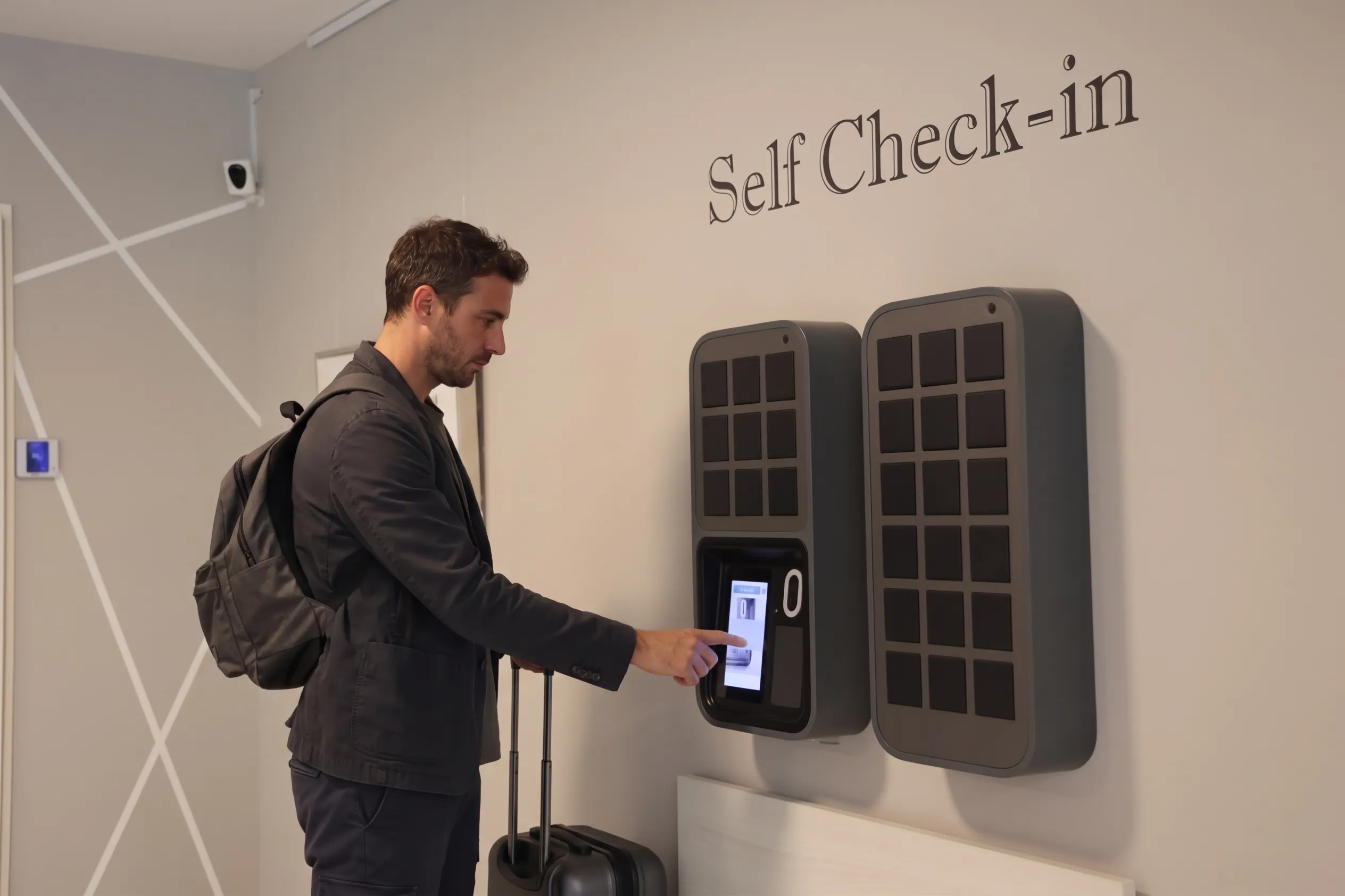
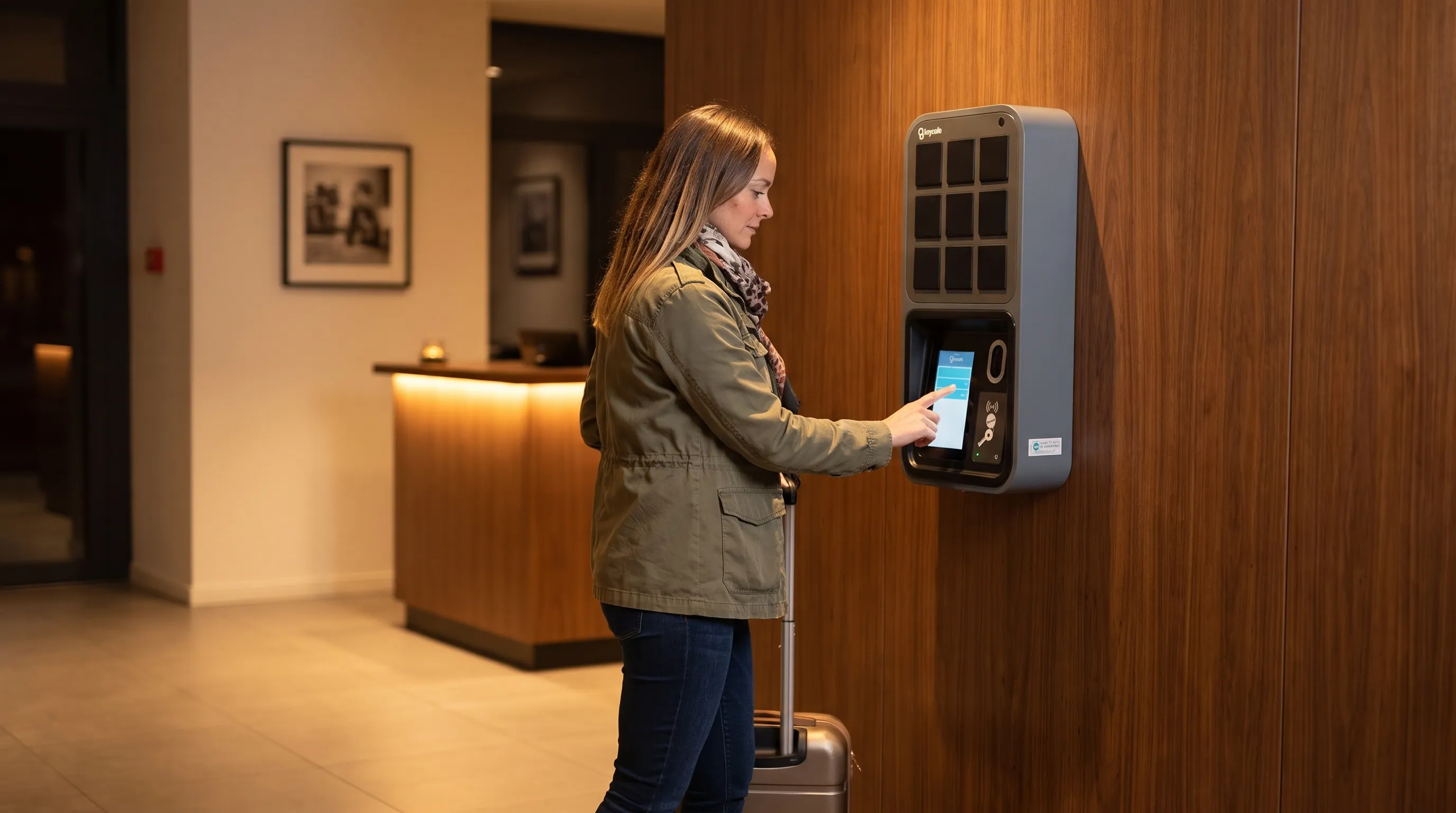
Connected to a property management system such as Mews through a Keycafe integration, the workflow runs automatically once a booking is confirmed. The PMS triggers Keycafe to generate a unique, time-limited access code tied strictly to the guest’s reservation dates. Before arrival, the hotel sends standard check-in details along with step-by-step instructions and the personal code. When a guest arrives at midnight or 2:00 AM, the guest enters that code on the SmartBox screen, follows the on-screen prompts to open the assigned bin, and collects the room key without waking a manager.
Skeptical operators rightly ask what happens when power flickers or last-minute travel changes hit. Properties can prepare for local power disruptions in advance (see how Keycafe operates during power outages). When plans shift, managers can grant, edit, or revoke access permissions remotely from a smartphone at any time, view real-time key status, and configure programmable alerts for key pickups or booking events.
Adopting self-check-in does not require stripping away personal service during daytime hours. As Hotel Facility Guide’s analysis of contactless check-in notes, direct-to-room adoption varies across traveler segments, and removing human contact entirely can alienate guests who want personal help. Heiwa Group took that exact approach at Hôtel de la Poste, a 15-room property managing 20 keys: instead of replacing human hospitality or installing costly locks on every door, the group deployed a centralized SmartBox to complement staff reception whenever guests arrive early or late.
Results from Independent and Seasonal Hotels
Independent properties across seasonal, urban, and heritage settings have used Keycafe to match late-arrival coverage to their actual room count and staffing budget.
Motel Impérial (Canada): Pairing Keycafe’s SmartBox with Mews automatically issues stay-dated access codes for confirmed bookings, allowing guests to check in year-round without staffing an off-season front desk. Staff gain real-time key visibility while keeping existing physical locks.
The Suffolk Hotel (UK): Deploying a Keycafe SmartBox with an expansion module enabled 24/7 self-check-in on existing doors and eliminated late-night shift coverage. The 12-bedroom property saved £4,000 per year in after-hours labor costs without relying on guest smartphones.
Miralago Locarno Easy Rooms (Switzerland): Connecting Keycafe’s SmartBox to Mews lets guests retrieve keys after reception hours on their own schedule. The hotel eliminated late-arrival overtime expenses and enabled room sales during unattended hours.
Domaine Sur Les Sarts (Belgium): Guests receive step-by-step instructions before arrival and collect their room keys from the locker in less than two minutes. The automated process relieved receptionists from rigid shift coverage.
Hotel Hospitz (Finland): Adopting SmartBox self-check-in eliminated evening reception shifts and late-night trips to the property during an eight-month low season from September to May. The hotel saved €25,000 in off-season operating costs while maintaining remote control over property access.
Other Uses for a Smart Key Locker Across the Property
Once a boutique hotel installs a key locker for late check-ins, most teams put extra bins to work for daily back-of-house control. Miralago Locarno Easy Rooms uses the same SmartBox internally to manage staff, technical, and restaurant keys alongside guest room keys, and Domaine Sur Les Sarts uses its system across both guest check-in and housekeeping workflows.
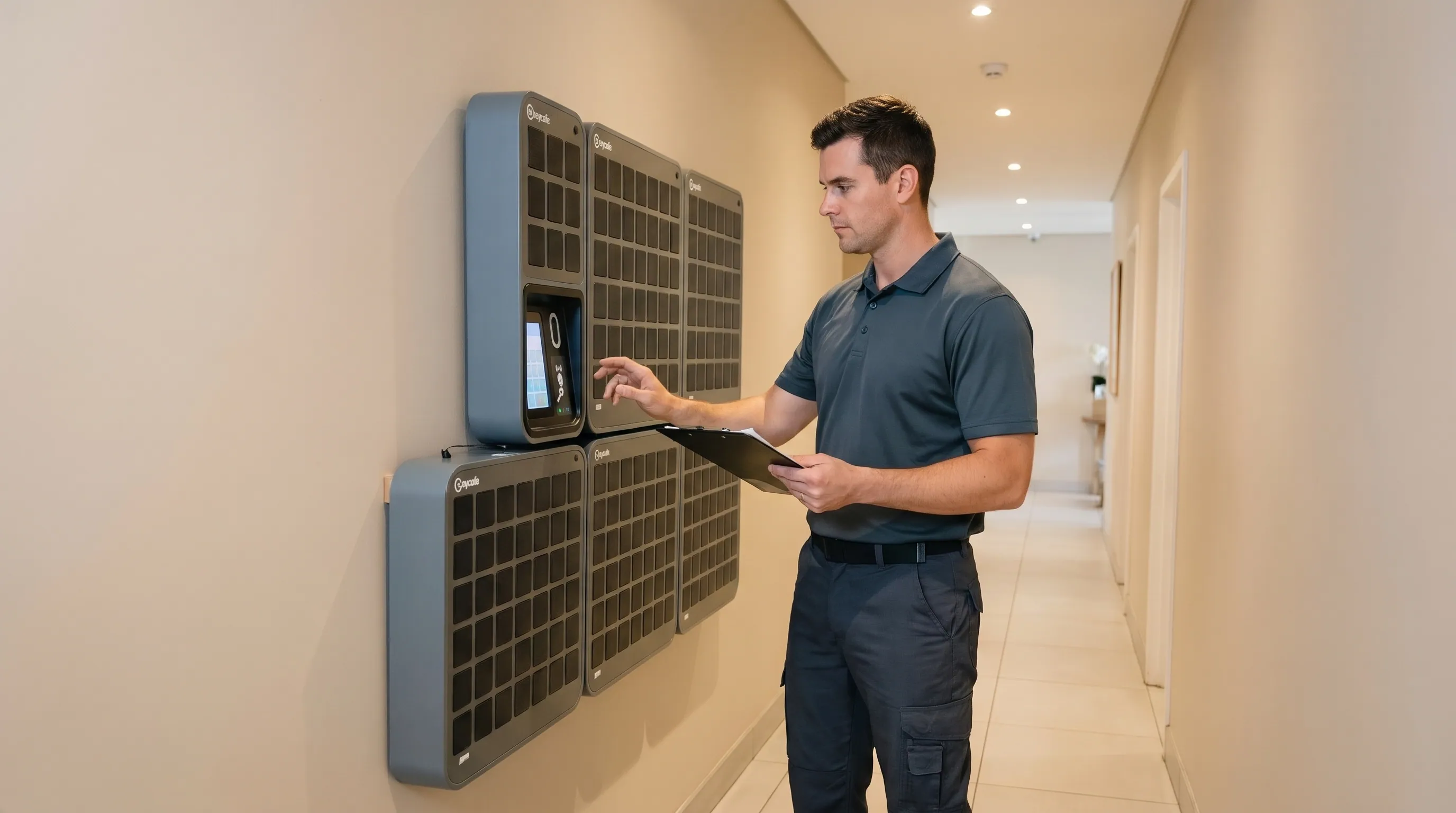
Managers can also grant temporary, revocable access to off-site contractors, maintenance technicians, or delivery vendors directly from a smartphone without handing out an untracked master key. As a property adds rooms or staff keys, operators can expand storage capacity by connecting modular units, using expansion units that connect directly to the SmartBox.
Get Started With Automated After-Hours Check-In
For 10 to 60 room hotels trying to protect margins without turning away late travelers, automated key lockers replace risky envelopes, late-night commutes, and expensive door lock retrofits with a single auditable system. Hotel owners and managers evaluating after-hours check-in options can explore more hospitality deployments in Keycafe’s hotel key management overview or contact the Keycafe team to review SmartBox hardware and PMS integrations for their property.