
It's 8:00 AM on a Monday. Fifteen customers are waiting at the advisor desks, porters are clearing the lane, and two of your best technicians are standing at empty bays, waiting for a repair order and a set of keys.
Nobody in that service drive is slacking. The problem started days earlier, when the calendar booked twelve vehicles into the same hour without checking what each one needed.
Dealership service scheduling works best when appointments are booked against real technician hours and bay capacity, not advisor availability. For general managers and fixed ops directors, it's one of the fastest ways to sell more labor hours without adding bays or staff.
Why does service scheduling matter so much to fixed ops?
Service brings in a small share of dealership sales but a large share of gross profit. Vehicle sales margins rise and fall from quarter to quarter, while service revenue stays steadier.
According to NADA Data 2025, U.S. franchised light-vehicle dealers wrote more than 276 million repair orders in 2025, with service and parts sales above $164 billion. In the first half of 2026, they wrote more than 136 million ROs worth $82.99 billion, and service, parts and body shop work made up 13.6% of total dealership sales dollars.
That small share of sales carries much more of the profit. In Canada, 2025 figures from the Canadian Automobile Dealers Association show service, parts and body shop together producing about 49% of total dealership gross profit. J.D. Power’s 2026 Canada CSI-LT Study found dealers capture 49% of service visits but 63% of service revenue, with average spend per dealership visit at a record $566.
Reynolds and Reynolds' 2026 Fixed Operations Golden Metrics report for Canada shows profit per customer-pay RO up 5.8% to 11.3% year over year across every population classification. The report points to hours sold and job mix, not only labor rates, as the source of that growth.
What does scheduling friction cost a dealership?
It costs visits. Revenue per RO is strong, but dealers are losing service visits to independent shops, quick-lube chains and mobile providers.
Fewer visits: The 2025 Cox Automotive Service Industry Study found U.S. dealerships handled 29% of service visits in 2025, down from 33% in 2018.
Long waits: J.D. Power has tracked average appointment waits of more than five days, and "it took too long" is the top complaint Cox hears from frustrated customers.
Lost vehicle sales: Cox found 74% of buyers who return for service are likely to buy their next vehicle from the same dealer, versus 44% of those who don't.
A customer who can't get an appointment this week often books somewhere else.
Where does dealership service scheduling break down?
Most delays don't come from a team that isn't working hard. They come from a calendar that can't see what's happening on the shop floor.
1. Booking by advisor time instead of shop capacity
Many scheduling tools book in 15 or 30-minute slots based on when an advisor can write up a vehicle. Three advisors taking four appointments each between 7:30 and 8:30 AM means twelve vehicles in one hour.
The front desk sees an orderly calendar. The shop sees an oil change, a brake job and a four-hour electrical diagnosis arriving at once. A-level technicians fall behind before 9:00, while express bays sit half empty by mid-afternoon.
2. Tire season crowds out more profitable repairs
In Canada and the northern U.S., spring and fall tire changes bring a rush of customers. Reynolds and Reynolds' Canadian data shows dealers earn less per visit during those peaks, because quick, low-profit tire swaps take up the lifts that bigger repairs need.
3. EVs need certified technicians and the right lifts
Battery electric and plug-in hybrid vehicles need high-voltage certified technicians and often heavier-duty lifts. J.D. Power's 2025 U.S. CSI Study found EV owners less satisfied with dealer service than gas-vehicle owners, and pointed to a shortage of EV-trained technicians as a key reason.
When an EV is booked into a general slot without checking who's certified that day, the vehicle can sit on the lot for days.
Advisor-based booking vs. capacity-based scheduling
Booking by advisor time | Booking by shop capacity | |
What sets the schedule | When an advisor is free to greet the customer | How many technician hours are open, and for what type of work |
Morning drop-off | Everyone arrives between 7:30 and 8:30, and lines form at the desk | Arrivals are spread out to match when bays free up |
EVs and complex repairs | Booked like any other job, so they often end up waiting | Booked when a qualified technician and the right lift are free |
Tires and oil changes | Take up main-shop bays and pull profit down | Handled in a separate express lane |
6 ways to improve dealership service scheduling test
High-performing service departments plan around two limits: technician hours and bay time. An hour that goes unbooked or sits idle can't be sold later, so every appointment should match a technician who can do the job and a bay that's free to hold it. These six changes help you get there.
1. Book around your technicians, not just the front desk
Link your online booking tool and phone scheduling to your dealership management system (DMS). That way, each appointment reserves real technician time, not just a drop-off slot.
Then sort that time by type of work. Your most experienced technicians handle diagnostics and complex repairs. Mid-level technicians take brakes, suspension and general repairs. Entry-level technicians cover oil changes, tires and inspections, and EV-certified technicians get their own schedule.
Leave some room. Don't book every hour days in advance. Keep a daily buffer for jobs that run long and unexpected tow-ins, and limit how many waiting customers you book each hour.
2. Keep seasonal and express work in its own lane
Set hard limits on how many tire swaps and express oil changes can be booked per hour. Route them to express lanes staffed by entry-level technicians so main-shop lifts and master technicians stay available for customer-pay and warranty repairs.
3. Book the first service visit at delivery
Most new-car buyers plan to come back for service, but many leave without a date on the calendar. Once they drive off, the dealership is competing with every shop in town for that first oil change.
Make booking the first visit part of every delivery. Walk the buyer to the service drive, introduce them to an advisor and set the appointment before they leave. Customers who have a good first visit tend to keep coming back, so this one step can shape years of service business.
4. Check for open recalls at booking
When a recall turns up during write-up, the shop often doesn't have the part or the time to fix it that day, so the customer has to come back.
Catch it earlier. When a customer books, check the vehicle for open recalls, make sure the parts are on hand and add the extra time to the appointment. Customers are happier when the recall and their routine service get done in one visit.
5. Get faster approvals with photos and videos
A schedule still slips when a car sits on a lift for two hours while the advisor waits for the customer to call back.
Texting photos or short videos of recommended repairs helps. Customers can see the worn brake pads or the leak for themselves, so they decide faster and feel more comfortable approving the work.
6. Remove physical handoff delays
A schedule can still stall when a technician is ready for the next car but can't find the key. Every walk to the front counter or search through hooks on the wall is time that isn't spent on repairs.
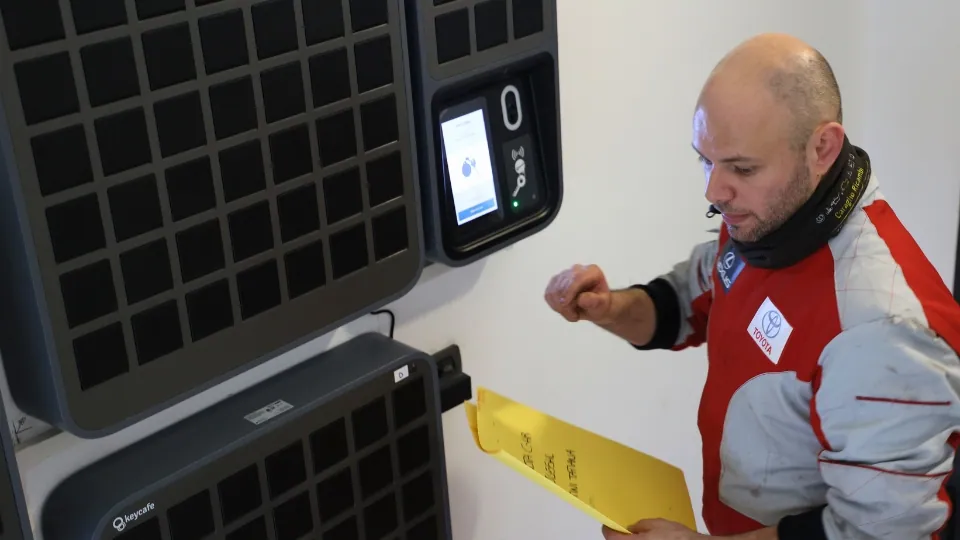
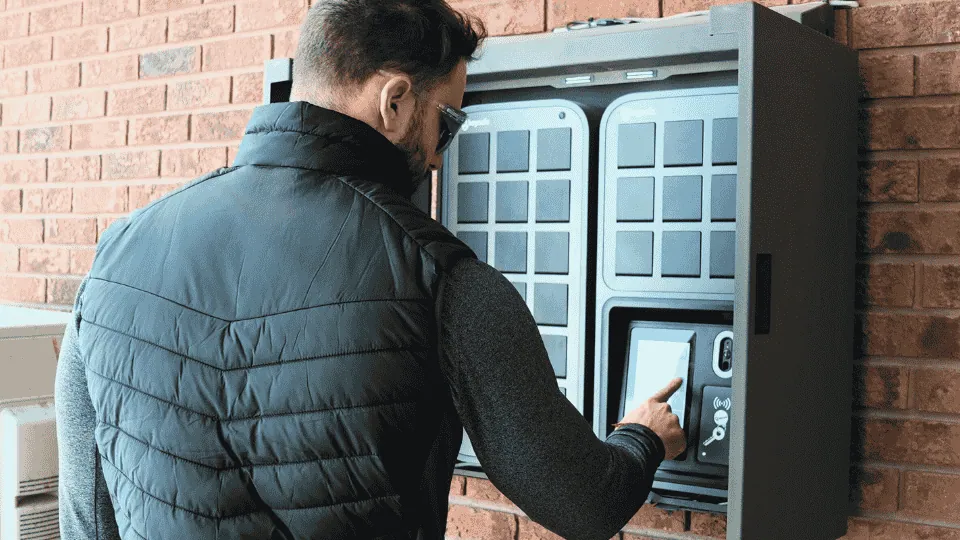
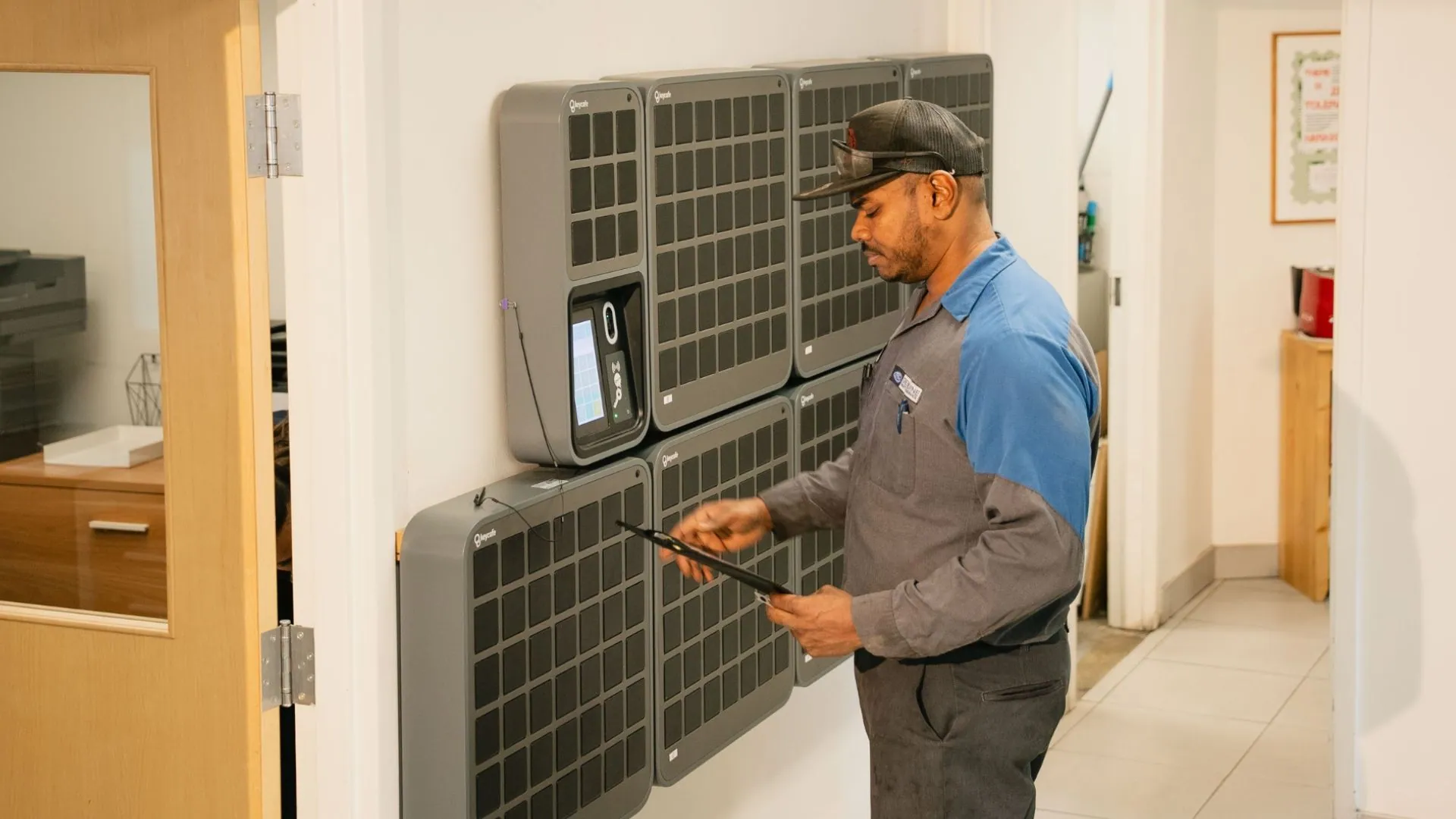
A smart key management system keeps keys in one secure place and records every pickup and return. In the service drive, that means:
Technicians get keys on their own with a PIN, badge or mobile app, without waiting for an advisor.
Managers can see where every key is and who had it last, in real time.
Access matches each role, so service staff can reach the keys for vehicles they're working on and nothing else.
Customers can drop off and pick up after hours with a code, which spreads out the morning rush.
Lange & Fetter Motors, a high-volume Ford dealership with about 350 keys, used to keep keys in a shared cabinet with no record of who took them. With a Keycafe SmartBox, staff now hand keys off between sales, detailing, service and outside body shops through the system, and technicians find keys without searching the building.
Where to start: look at your own service drive
You don't need new systems or more bays to improve scheduling. Start by watching where your day loses time:
How often do cars miss the time you promised the customer?
Are oil changes and tire swaps tying up the lifts your experienced technicians need?
How long do cars sit while you wait for customers to approve repairs?
How much time do technicians spend looking for keys?
Pick the biggest problem and fix it first. When your schedule matches what your team and bays can handle, customers wait less, technicians get more done and more people keep coming back to your service drive.
Is key hunting on your list? Book a Keycafe demo to see how a SmartBox would work in your service drive.