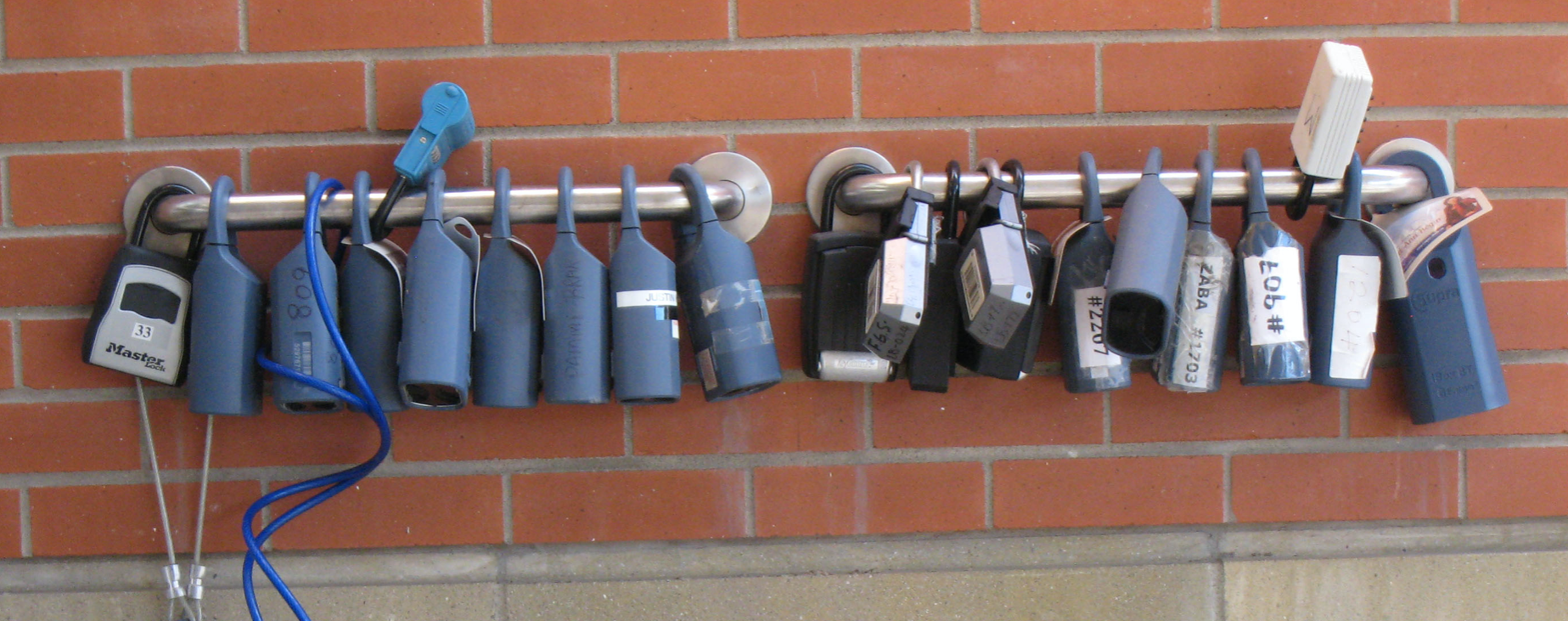

Storing keys is the easy part. A steel cabinet with numbered hooks and a lock has handled that job for fifty years, and it handles it well. Storage, however, is only part of what most operations actually need. The more demanding requirement is knowing who holds which key at any given moment, without having to ask anyone.
A cabinet was never designed to answer that question. It delegates the answer to a logbook, which in turn depends on the memory and cooperation of whoever happens to be handling keys during a busy shift.
The comparison below sets out the practical differences between the two categories, along with what changed for five organizations that moved from one to the other.
What a Smart Key Management System Actually Is
Same premise as a cabinet: keys stay locked up. The difference is what happens the moment someone takes one out.
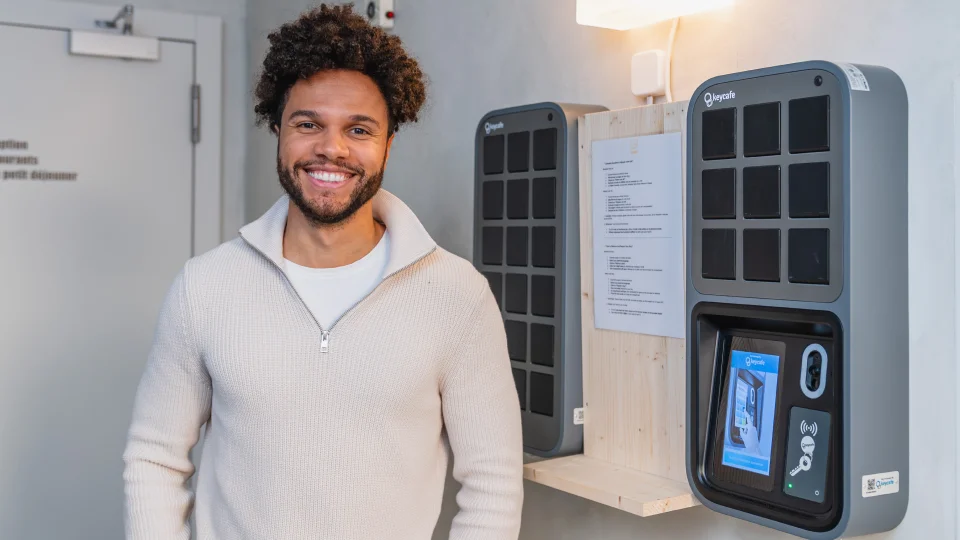
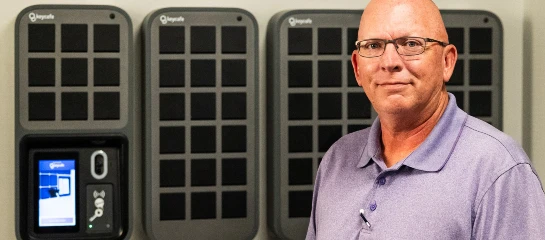
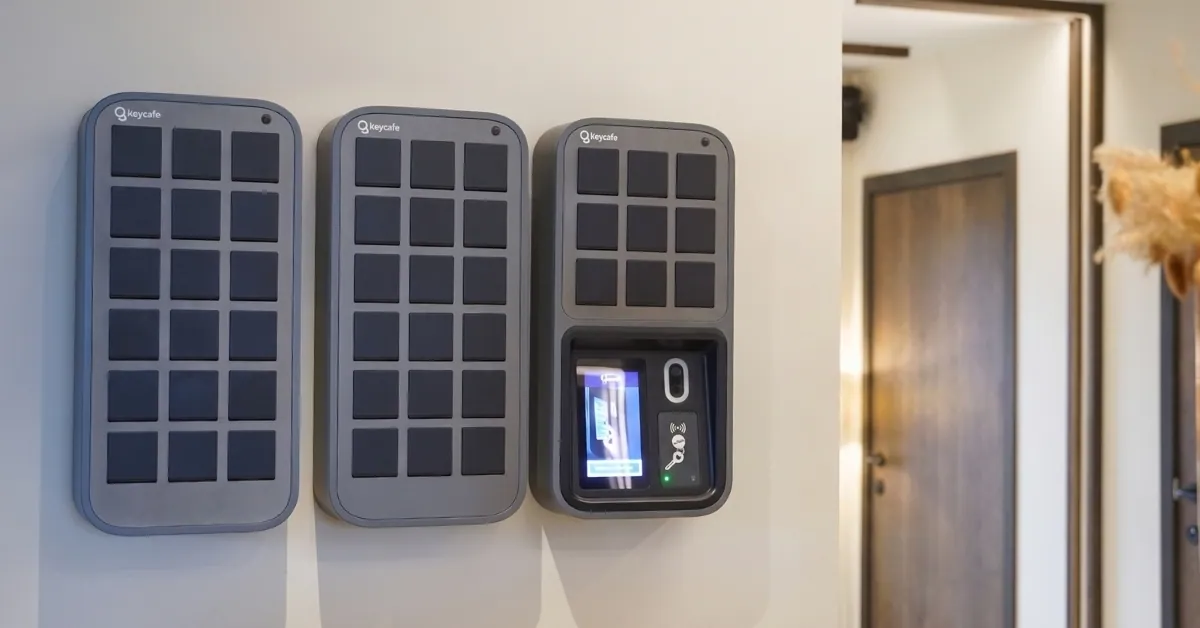
Keycafe's system is one example of how this works in practice. Every key is tagged with a unique NFC fob and sits in its own individual compartment inside a SmartBox locker. The user authenticates at the unit — with a PIN, a credential, a QR code or the Keycafe app — and only their assigned compartment opens. Permissions, real-time visibility, audit trails and multi-site control all follow from that one mechanism.
With both categories on the table, the comparison speaks for itself.
The Comparison at a Glance
Traditional key cabinet | Smart key management system | |
Movement log | Manual and optional | Automatic, created at authentication |
Off-hours access | Requires staff on site | Self-service, 24/7 |
Permissions | One cabinet key: all-or-nothing access | By user, group, key and schedule |
Multi-site | One cabinet and one logbook per location | Centralized management across all sites |
Audit trail | Manual reconstruction, if the data exists at all | Full history with time, date and user |
Operating cost | Staff hours spent policing keys | No human step in the process |
None of that means much until a key goes missing at the worst possible moment. Here are five companies and five places where the difference showed up.
1. The Log Only Exists If Someone Decides to Write It
This is the fundamental difference, and almost every other one follows from it.
In a cabinet system, logging is voluntary. Someone has to stop, pick up a pen and write down their name. If they don't, the key still leaves the building and the cabinet never knows.
Concord Hospitality, one of the largest hotel management companies in the United States, knew the limits of that approach firsthand. Its properties ran on spreadsheets, paper logs and large unsecured key boxes, which left them with no way to control permissions and little ability to hold staff accountable for lost keys.
A smart system reverses the order of operations: the compartment doesn't open until the user identifies themselves. The record isn't an extra step in the process. It is the process.
Keycafe has been an incredible addition to our organization's security, peace of mind, and accountability for associates.
— Kevin Krause, Chief Engineer, Concord Hospitality
2. Somebody Has to Run the Cabinet — And That Costs Real Money
Once key volume grows, the standard fix is to put a person in charge of it. It works, but it's expensive.
Morgan Sindall, the UK contractor within Morgan Sindall Group, did exactly that: on large projects it assigned a dedicated on-site employee to oversee key management, signing keys in and out by hand. On a residential project in London, the team automated the whole thing with Keycafe. The system removed the need for a person physically signing keys in and out, and gave subcontractors the flexibility to collect keys whenever it suited them.
Estimated savings in staffing costs: £3,000 per month.
We have saved significant time, cost and stress in managing keys for our construction project.
— Rob Harrison, Site Manager, Morgan Sindall
A cabinet doesn't carry that cost on the purchase invoice. It carries it on payroll.
3. Off-Hours Is Where a Cabinet Fails Hardest
A cabinet has implicit operating hours — the hours when somebody is there to open it.
Wallace Community College removed that limit for its fleet. Staff request a vehicle through a campus-wide form, and once the booking is approved the system automatically sends the driver an access code valid only for the length of that reservation. The driver enters the code at the SmartBox outside the Student and Campus Services office and takes the key — pickups and drop-offs now happen with no staff presence required, at any hour.
If your operation runs shifts, early departures or after-hours handovers, a cabinet is closed during exactly the hours that carry the most friction.
4. One Cabinet Per Site Isn't a System
Adding cabinets multiplies the problem: every location ends up with its own box, its own logbook and its own version of the truth.
Your Place Property Management solved it by centralizing its keys with Keycafe. A single SmartBox in the office lobby now manages hundreds of client keys, eliminating the logistical headaches of juggling numerous key boxes and giving both residents and contractors a secure way in. Contractors can service properties during the day without the tenant being home, which removed the after-hours surcharges owners had been absorbing.
In hospitality, the same pattern shows up at a different scale: Small Town Hospitality runs SmartBoxes across 19 motels, and Concord Hospitality has scaled to more than 20 locations with Keycafe.
The advantage isn't having more boxes. It's having one dashboard that shows all of them.
5. When the Real Cost Is Replacing the Key
The Champlin Police Department, which covers a Minneapolis suburb of 25,000 residents with a fleet of more than 20 squad cars, ran its key control out of a few small boxes mounted on a wall. The compartments were too small to hold the larger key fobs, there was no online management or tracking, and the units eventually began to fail structurally. Keys went missing regularly — and some of those fobs cost up to $500 each to replace.
The deeper problem wasn't the hardware. With no real-time tracking, nobody could establish who had used a key last, which turned every missing fob into a round of guesswork.
We have not lost a key or key fob since installing this system.
— Matt Smith, Lieutenant, Champlin Police Department
Officers now log in with a fob or PIN, pick the key they need from a touchscreen, and the transaction records itself. Supervisors hold separate access to specific keys, such as those for locked offices, without opening the whole inventory to everyone.
A cabinet has no opinion about what a key costs to replace. It treats a $2 office key and a $500 vehicle fob exactly the same way.
Start With One Question
You don't need a formal assessment. Just answer this without asking anyone: Who has key number three in your cabinet right now?
If it took you more than ten seconds, or you had to go check a logbook, you already know which category your system belongs to.
Talk to our team to see how companies in construction, hospitality, property management and security made the switch, or browse the full case studies by industry.