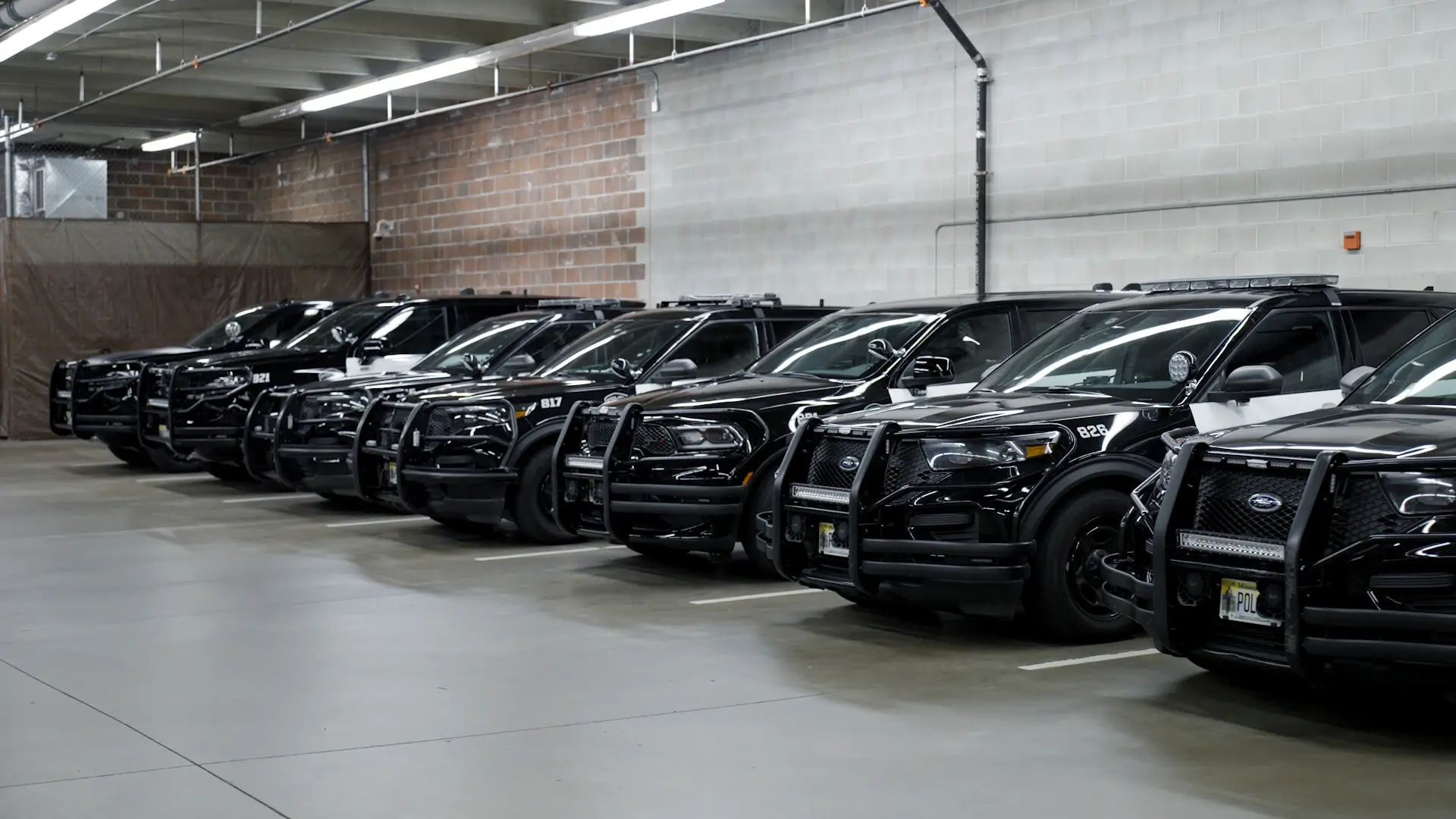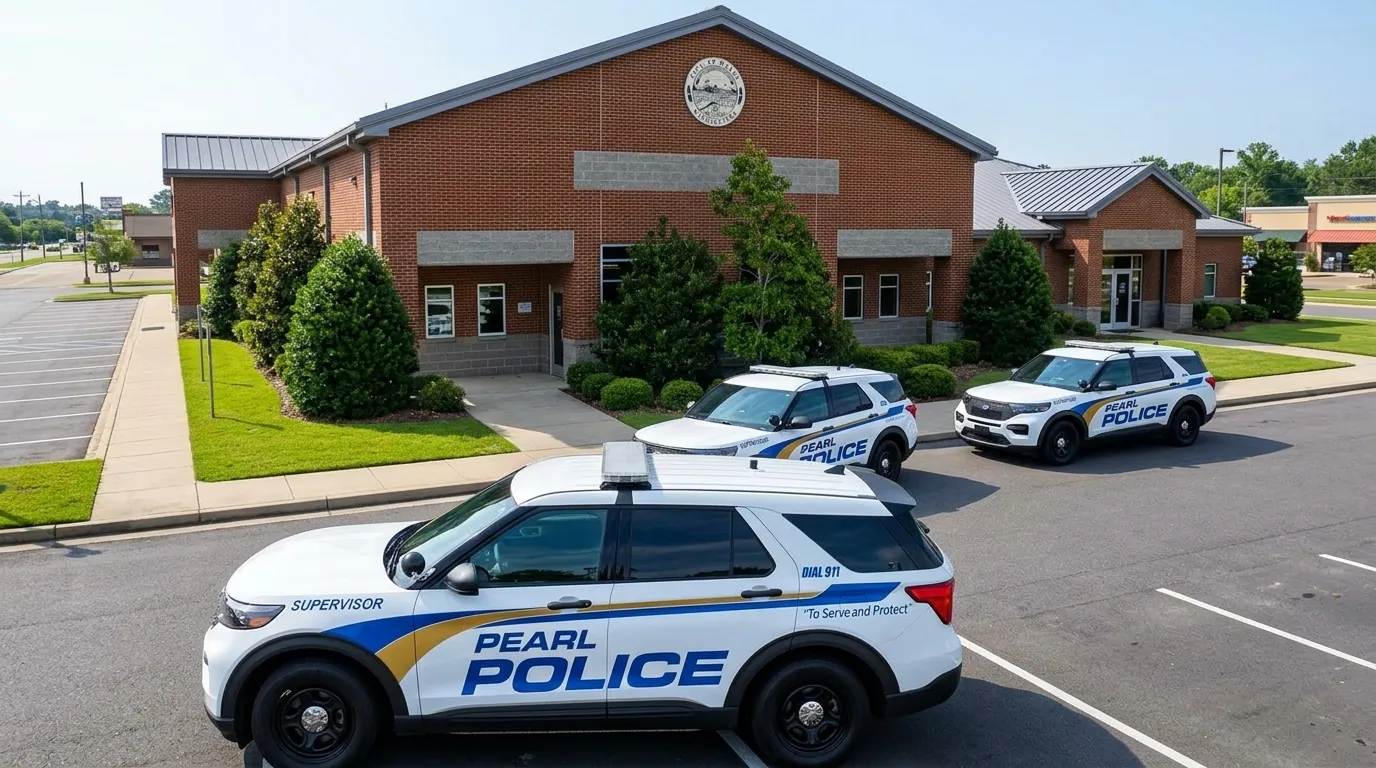

Mechanical key boxes remain one of the most common ways to store the keys of a police fleet. They meet a basic need, which is keeping keys in a fixed, locked location, but they were not designed to answer the questions a department has to answer today: who holds each key, since when, and what happened when a key did not come back.
The experiences of three police departments in the United States show where this type of system stops being enough.
Mechanical boxes fall short in size and durability
The first limit is usually physical. Patrol vehicle keys are no longer simple metal pieces but larger fobs that many older boxes cannot hold.
The Champlin Police Department in Minnesota, responsible for public safety in a Minneapolis suburb of 25,000 residents, operates a fleet of more than 20 squad cars. Its previous system consisted of a few small boxes mounted on a wall, with compartments too small to hold all of its keys, particularly the larger fobs.
When keys do not have a proper place, they tend to end up outside the box, and that is what happened in Champlin. The department lost keys regularly, and some of those fobs cost up to $500 each to replace.
Size was not the only physical limit. In Champlin, the previous box also began to fail structurally, which led the department to look for a more durable solution. For an agency that depends on its vehicles being available on every shift, equipment that deteriorates is an operational risk and not just a maintenance nuisance.
Without online management, nobody can reconstruct what happened
The second limit is information. A wall box stores keys but does not record who takes them or when, so every key that goes missing starts an informal investigation.
In Champlin, the previous system offered no online management or tracking. Without a real-time record, officers could not determine who had last used a key, which created confusion, wasted time and disputes over who was responsible. Lieutenant Matt Smith, who had to track down lost keys with no leads to follow, spent more time on this than anyone else.
The usual alternative is to pair the box with a paper log, and the other two departments show why that combination fails. At the Norman Police Department in Oklahoma, which serves 120,000 residents with 180 officers and a fleet of 34 patrol vehicles, officers frequently forgot to sign the log. As a result, it was common for an officer to arrive for a shift and find that the assigned vehicle was still in use by someone from the previous shift, which took 15 to 30 minutes out of the start of the day.
At the Aransas Pass Police Department in Texas, a paper log existed but was ignored most of the time by their 32 officers. In addition, every key was available to all staff, regardless of role.
What changes with an electronic system
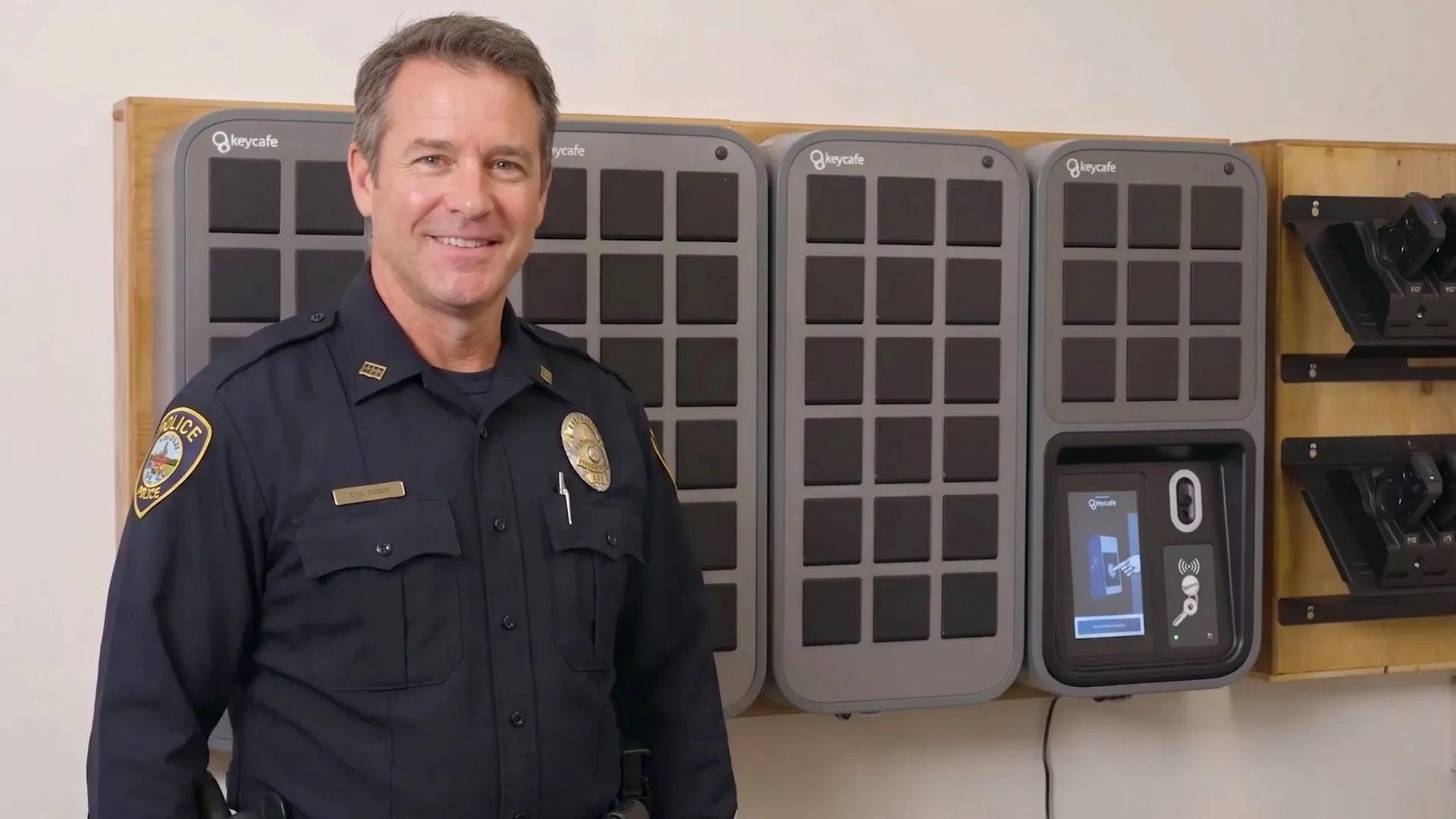
The three departments replaced their manual systems with Keycafe. After evaluating several alternatives, Champlin chose it for its cloud-based management, the design and size of the boxes, and the software features that came with it. Lieutenant Matt Smith noted that the department wanted to install the system in its roll call room with a professional appearance, and not as a large industrial metal box hanging on the wall.
The workflow is simple, officers identify themselves with a badge or a PIN, select the key they need on a touchscreen, and the system records the transaction automatically. Across all three departments, every pickup and return is logged without depending on someone remembering to sign. Officers do not need to install an app, because management belongs to administrators, who can run the system from any internet-connected device.
Once that record exists, departments can do things that were not possible before. For example:
Assign keys to specific officers and receive notifications when a key is not returned on time.
Give supervisory staff separate access to specific keys, such as those for locked offices, without opening the rest of the inventory.
Resolve issues remotely, for example when an officer forgets a PIN.
Assign the same key to multiple users without duplicating it physically, which reduces costs.
The most cited result is also the simplest. According to Lieutenant Matt Smith of Champlin, "We have not lost a key or key fob since installing this system." With the losses gone, so were the replacements of up to $500 per fob, and real-time tracking improved accountability among officers.
The effect does not depend on department size. In Norman, where an officer could previously lose 15 to 30 minutes looking for a patrol car that was still in use, it is now possible to see who has each vehicle on arrival, and there is no longer a need to tie up the radio channel to locate keys. In Aransas Pass, the paper log that was once ignored most of the time is now generated digitally every time a key is picked up or returned, without relying on anyone to remember to sign.
What to check before replacing a mechanical box
For a department evaluating whether its current system is enough, four questions are useful:
Do the compartments hold every fob in the fleet, including the largest ones?
Is it possible to know right now who holds each key without asking anyone?
How many keys were replaced last year, and at what cost?
Is the log always completed, or only when someone remembers?
If any answer is no, the box is probably fulfilling its storage function but not its control function.
Talk to our team to learn how departments of different sizes implemented an auditable key control system, or read the full Champlin, Norman, and Aransas Pass case studies for the detailed results.