For a law enforcement agency, every patrol car, every backup unit, every prisoner transport van and every specialized vehicle represents a key to hand out, to track and to recover. Multiply that across a fleet, add rotating shifts and officers coming on and off duty around the clock, and key management quietly becomes a job of its own.
For a long time, the method barely changed: a key box on the wall, a set of tags, and a supervisor to call whenever someone needed a vehicle. The system works as long as volume stays low. As soon as the fleet grows, its limits show — time lost, no reliable history, accountability that is impossible to establish, and a real risk of losing keys.
That is exactly the situation Assistant Chief of Police Kyle Hymel inherited at the Pearl Police Department, the agency providing law enforcement and public safety services to the city of Pearl, Mississippi.
Today, the department manages access to a fleet of roughly 50 vehicles through Keycafe, now in its second year of use.
A fleet that had outgrown the key board
The starting point was a fleet that had simply become too large for a manual system to handle, and Kyle Hymel traces the problem less to his own department than to a habit the profession never got around to questioning:
When I came into the department — and this is really a fault of the history of law enforcement and keys and managing fleets — you have a key box, and you have these keys, and you have to contact somebody if you need to check out a key, and this, that or the other.
What he inherited was not a handful of patrol cars but several distinct categories of vehicle at once, each with its own users, its own schedule and its own set of keys to account for:
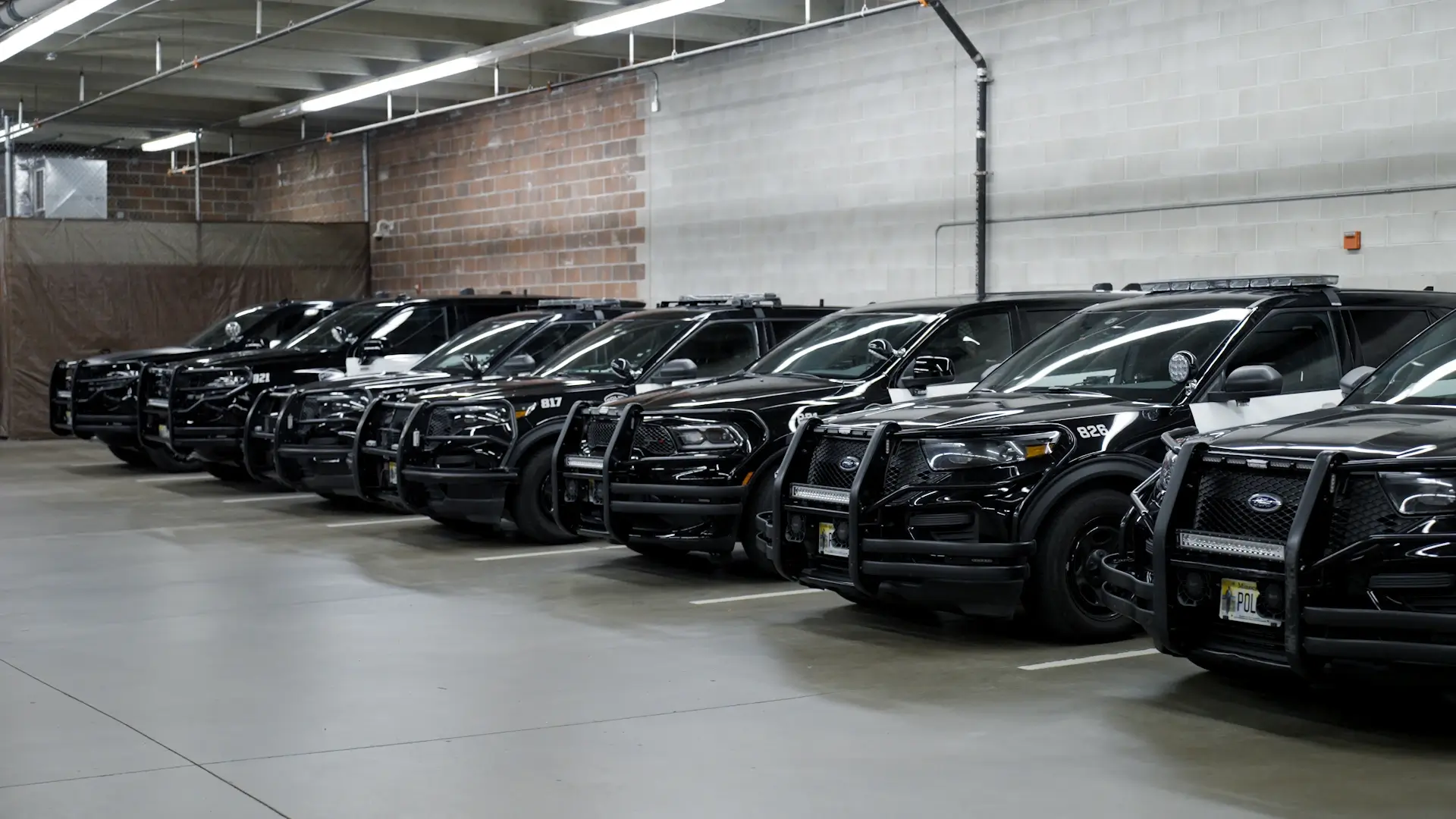
We were trying to manage a fleet, and backup cars, and transport vans, and SWAT vehicles, and all the things, and I knew there had to be an easier way.
Before Keycafe, the department's entire key management system amounted to "key tags and a box" — which meant no record of who had taken what, no visibility into which vehicles were genuinely available at any given moment, and no way to reconstruct a chain of responsibility once a key stopped turning up where it was supposed to be.
Accountability: knowing who took which vehicle, and when
The most immediate change was not speed. It was traceability.
Before, you didn't know who had this, and I thought this person had that. Now there's an audit trail. Who checked this car out last time? I can go to the app and look — and, hey, this person checked the key out. It's a game changer.
Because every pickup and every return is tied to an identified user, the information is immediate and indisputable. There is no longer any need to rebuild a chain of responsibility from memory or from a handwritten sign-out sheet.
In an environment where vehicle condition, incidents and chain of custody all matter, that record does more than locate a key. It changes how equipment is treated.
The biggest improvement is accountability with the officers that are using the cars — and the efficiency of getting the vehicles out.
One cabinet for patrol cars, transport vans, SWAT vehicles — and more
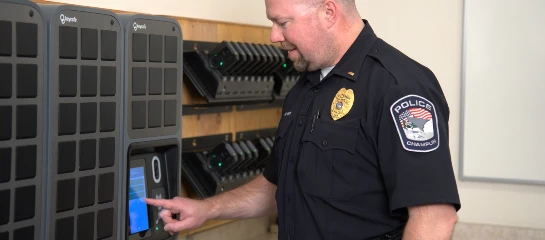
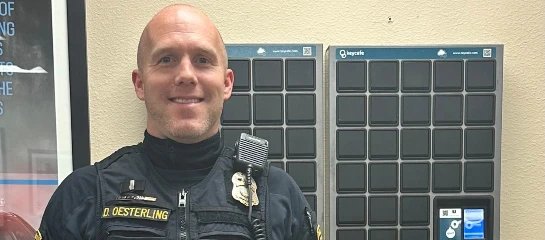
The deployment itself is deliberately simple: a single Keycafe unit installed in a central location.
We have a box mounted back in our patrol division, and it houses many of the keys for the department — their cars, backup cars, prisoner transport vans, SWAT vehicles.
What the department did not anticipate was how quickly the use case would expand beyond vehicles:
We also use it for other cool things, because you can use it for anything. If I need something small, maybe a sensitive item that I need to give to one of the patrol divisions, I can lock it in the key box and they can go check it out. I send them a code, and they go check it out.
A cabinet bought to manage fleet keys became a secure, traceable handoff point for any small controlled item that needs to move between people and shifts.
A supervisor-level access model built around division responsibility
Rather than opening the system to every officer, the department structured access around its existing chain of command.
All of our supervisors — lieutenants, sergeants and above — have access to Keycafe. Not every officer in the department has access to it, so each division supervisor is responsible for their keys in the key box.
Backup keys for each division are stored in the SmartBox. The day-to-day flow is straightforward:
Keys for patrol cars, backup units, transport vans and specialized vehicles are centralized in the cabinet mounted in the patrol division.
Supervisors at lieutenant and sergeant level and above hold access rights and pull keys directly from the unit.
Each division supervisor owns their respective keys stored in the SmartBox.
One-time codes can be issued remotely when a specific item needs to reach a specific person.
Every pickup and return is logged against an identified user and visible in the app.
The result is a permission structure that mirrors how the department already operates, rather than one imposed on top of it.
Remote administration: fixing a problem at 8 p.m. without driving in
Asked which feature matters most to him, Kyle Hymel did not hesitate: the app.
The Keycafe app is amazing, because I get officers that mess up all the time. I'll be at the house, it'll be 8:00 at night, I've already left the office, and they'll say: we pulled this key out of the box but we didn't check it out, and we put it back in — we didn't close the lid first, so now it still thinks the key's checked out, but it's in the box. Can you help us?
The operational value is measured in trips not taken:
The app helps mitigate a lot of problems where somebody would have to actually come back to the police department, unlock the box and do all those things. We can do it remotely. It's really helpful.
For a department running 24-hour shifts, the ability to resolve a key status issue at any hour, from anywhere, removes a recurring source of friction — and keeps vehicles available instead of stranded by an administrative error.
Adoption in an environment that resists change
In law enforcement, introducing a new tool rarely happens without friction. Kyle Hymel is candid about it:
With law enforcement, the one thing law enforcement hates is anything new. They want to keep it the same old way. So of course there was a little pushback on the integration of it.
That resistance did not last long. Two years later, the department is still seeing success with Keycafe. The deployment itself took almost no time:
We contacted Keycafe. I got in with the IT director on getting it looped into our network. It got shipped here. Took five seconds to mount. Went through the program. It's easy.
The only real prerequisite was a short conversation with IT to connect the unit to the department's network.
Two years without losing a key
Two years into the deployment, the clearest measure of what the system is worth is what has stopped happening in the department:
We're not losing keys. We're not going to get keys cut. I know there is a return on investment.
Those gains run through the whole operation: keys that stay where they belong, replacements that never need to be cut, vehicles that are not sitting idle while someone hunts for the key that opens them, and supervisor hours that are no longer spent acting as a manual checkout desk for the rest of the department.
Asked what he would say to another agency weighing a key management solution, Kyle Hymel pointed straight at the argument he hears most often:
If your department's answer is "this is because this is the way we've always done it," I would suggest seeking alternatives. There are technical solutions that can minimize your stress on management of the fleets and can greatly improve your efficiency.
The Pearl Police Department's experience highlights several lessons that apply to any organization managing a vehicle fleet or a pool of shared, controlled assets:
Centralize keys in a connected cabinet rather than on an unsecured board with tags.
Identify every user so that movements produce a complete, indisputable history.
Map access rights to the existing chain of command instead of granting blanket access.
Enable remote administration so key status issues can be resolved outside office hours, without a trip back to the station.
Extend the system beyond vehicles to any small, sensitive item that needs a traceable handoff between shifts.
Treat "we've always done it this way" as a signal to evaluate alternatives, not as a justification.
Talk to our team to see how agencies replaced key boards and sign-out sheets with full audit trails.