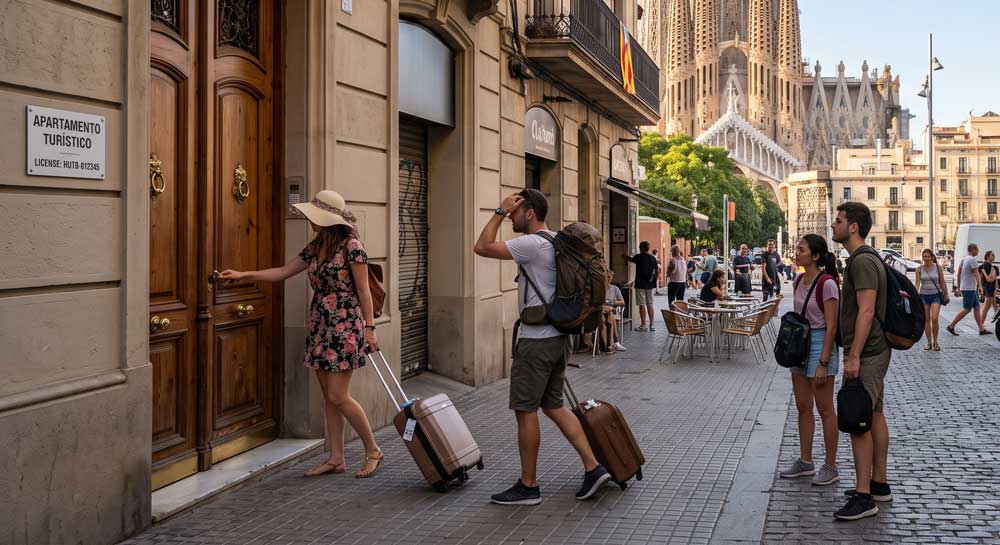

Paskutinį kartą peržiūrėta: 2026 m. liepos 27 d. Barselonos taisyklės iš esmės pasikeitė 2024, 2025 ir vėl 2026 metais. Jei skaitėte senesnį šio miesto gidą, didžioji dalis informacijos dabar yra pasenusi.
Trumpoji versija
Jei turite trisdešimt sekundžių, štai visas paveikslas.
- Barselona neišdavė naujų turistinių butų licencijų nuo 2014 metų. Jūs negalite jos prašyti. Vienintelis būdas – įsigyti nekilnojamąjį turtą, kuris jau turi tokią licenciją.
- Visos galiojančios licencijos nustoja galioti iki 2028 metų, ir miestas pareiškė, kad nė vienos iš jų nepratęs. Paveikta maždaug 10 000 butų.
- "Turistinis butas" reiškia visą būstą, nuomojamą 31 dieną iš eilės arba trumpiau. Pagal šią licenciją negalite nuomoti kambario po kambario.
- Jūsų kaimynai dabar gali jus vetuoti. Nuo 2025 m. balandžio mėn. Ispanijos įstatymai reikalauja, kad savininkų bendrija aiškiai patvirtintų turistų apgyvendinimą trijų penktadalių dviguba balsų dauguma.
- Nakvynės 32 naktis ir ilgiau yra kitoks teisinis darinys. Nepatenka į turizmo reglamentavimą, turizmo mokesčius ir 2028 m. galiojimo pabaigą.
- Kiekviename skelbime jums reikia dviejų atskirų registracijos numerių: Katalonijos turizmo registro numerio ir, nuo 2025 m. liepos mėn., Ispanijos nacionalinio numerio.
- Turizmo mokestis apytiksliai padvigubėjo 2026 m. balandžio 1 d. Barselonos turistiniame bute dabar taikomas maždaug 9,50 € mokestis asmeniui už naktį, įskaičiavus savivaldybės priemoką.
Visa toliau pateikta informacija paaiškina šiuos punktus ir nurodo, iš kur atsirado kiekviena taisyklė.
Pradėkime nuo svarbiausio: 2028 m. galiojimo pabaigos
Daugelis gidų tai nutyli. Tai turėtų būti pirmas dalykas, kurį žinote, nes tai lemia, ar visa kita jums svarbu.
Barselonos miesto taryba pareiškė ketinanti nepratęsti miesto turistinių butų licencijų, kai jos pasibaigs 2028 metais. Pati taryba išreiškė tai neįprastai tiesmukai: taikant atitinkamus Katalonijos teisės aktus "bus panaikinti visi turistiniam naudojimui skirti butai (HUT) mieste", ir taryba "planuoja nepratęsti 10 000 turistinių butų licencijų, kurių galiojimo laikas baigsis 2028 metais".
Teisinis mechanizmas yra 2023 m. lapkričio 7 d. Dekreto Llei 3/2023, Katalonijos dekreto įstatymas dėl turistinių būstų miestų planavimo režimo. Jis klasifikuoja Barseloną kaip savivaldybę, kurioje yra įtempta būsto rinka, ir esamus leidimus pavertė terminuotais. Kad galėtumėte toliau veikti po pereinamojo laikotarpio, jums reikės miesto planavimo licencijos, išduotos pagal pačios savivaldybės planavimo taisykles. Be jos veikla turi būti nutraukta.
Barselona pareiškė, kad neketina kurti planavimo maršruto, kuris leistų išduoti tokias licencijas. Taryba taip pat 2025 metais pradėjo peržiūrėti PEUAT, savo specialųjį miesto planą dėl turizmo apgyvendinimo, vertindama plaukiojančios populiacijos poveikį, turizmo įtaką viešosioms erdvėms ir miesto audinio pobūdį.
Ispanijos Konstitucinis Teismas 2025 m. kovo mėn. nutarimu patvirtino sistemą, atmesdamas savininkų ir platformų prieštaravimus.
Trys atviros pastabos.
Pirma, yra pratęsimo mechanizmas, kurį dauguma informacijos šaltinių praleidžia. Savininkai, galintys įrodyti, kad pereinamasis režimas jiems nekompensuoja leidimo praradimo, gali kreiptis į tarybą dėl vienkartinio pratęsimo iki penkerių metų. Pagal dekretą, ši paraiška turi būti pateikta praėjus ketveriems metams nuo įsigaliojimo ir iki pereinamojo laikotarpio pabaigos. Laikas yra ribotas, ir jo nustatymas yra svarbus.
Antra, licencijos turėjimas šiandien nieko negarantuoja. Kai planavimo licencijos apskritai yra išduodamos, dekretas reikalauja, kad tarybos jas suteiktų pagal viešumo, objektyvumo, nešališkumo, skaidrumo ir konkurencingumo kriterijus. Tai yra konkurencinis procesas, o ne automatinis pratęsimas.
Trečia, dėl to ginčijamasi ir politinė situacija gali keistis. Teisiniai iššūkiai tęsiasi, o Barselonoje vyks savivaldybių rinkimai prieš visišką panaikinimą. Nė vienas aspektas nėra neginčijamas. Jei atsakymas lemia didelę sumą, pasikonsultuokite su Ispanijos teisininku dėl savo konkrečios licencijos, o ne pasikliaukite bendraisiais gidais.
Šaltiniai: Barselonos miesto taryba, Dekreto įstatymo 3/2023 taikymas turistiniams butams (HUT) (anglų k.). Visas tekstas: Dekretas Llei 3/2023 Katalonijos teisės portale (katalonų k.).
Iš pirmo žvilgsnio
| Klausimas | Trumpas atsakymas |
|---|---|
| Kas laikoma turistine nuoma? | Visas būstas, nuomojamas 31 dieną ar trumpiau |
| Kaip tai vadinama teisėje? | Habitatge d'ús turístic, arba HUT |
| Kas suteikia leidimą? | Savivaldybė, registruojant Generalitat |
| Ar galiu gauti naują licenciją? | Ne. Nuo 2014 m. nė viena neišduota |
| Ar galiu nuomoti vieną kambarį? | Ne. HUT nuomojami visas |
| Ar licencijos baigia galioti? | Taip, iki 2028 m., su ribota pratęsimo galimybe |
| Ar man reikalingas nacionalinis registracijos numeris? | Taip, nuo 2025 m. liepos 1 d. |
| Ar privalau pranešti apie svečius? | Taip, per 24 valandas, per SES.HOSPEDAJES |
| Ar kaimynai turi teisę pasisakyti? | Taip, viskam, kas nauja nuo 2025 m. balandžio 3 d. |
| Turizmo mokestis už turistinį butą? | Apie 9,50 € asmeniui už naktį, maks. 7 naktys |
| Kokia yra teisinė alternatyva? | Nuoma 32 naktims ar ilgiau |
Kas laikoma turistiniu butu
Katalonijos įstatymai tai vadina habitatge d'ús turístic, dažniausiai sutrumpintai HUT. Paprastais žodžiais, tai yra namai, kuriuos savininkas atiduoda kitam asmeniui, tiesiogiai arba per tarpininką, mainais už mokėjimą, nepertraukiamam laikotarpiui, trunkanciam 31 dieną ar trumpiau.
Du aspektai dažnai suklaidina žmones.
Arba visas namas, arba nieko. HUT nuomojami visas, o svečių skaičių riboja nuosavybės tinkamumo gyventi sertifikatas. Nuomoti atskirus kambarius pagal šio tipo licenciją neleidžiama. Katalonija turi atskirą kategoriją kambarių nuomai namuose, kuriuose patys gyvenate.
31 diena yra riba. Nuo 32 naktų ir ilgiau jūs nebevaldote turisto buto. Taikomas gyvenamųjų patalpų arba sezoninės nuomos režimas pagal Ispanijos miesto nuomos įstatymą, o Katalonijos nuomos reglamentavimas galioja didelėje miesto dalyje. Šis skirtumas Barselonoje yra nepaprastai svarbus, nes tai yra pagrindinis būdas, kuriuo operatoriai naudojasi, kad išlaikytų nuosavybės turtą naudojime po 2028 metų.
Šaltiniai: Generalitat de Catalunya, Habitatges d'ús turístic (Canal Empresa) ir Departament d'Empresa i Treball (katalonų k.). Pagrindinis apibrėžimas pateikiamas Katalonijos turizmo dekrete, Dekrete 75/2020, ieškomame pagal pavadinimą ir numerį DOGC.
Ar galite gauti licenciją? Beveik tikrai ne
Tai yra dažniausiai užduodamas klausimas, o atsakymas yra trumpas.
Barselona nustojo išduoti naujas HUT licencijas 2014 metais, o 2017 metais patvirtintas PEUAT tai įtvirtino kaip planavimo politiką. Nuo to laiko nieko naujo nebuvo sukurta.
Esamos licencijos negali būti parduodamos atskirai. Jos perduodamos tik parduodant visą nekilnojamąjį turtą, prie kurio jos priskirtos, todėl Barselonos butai, reklamuojami su turistine licencija, turi didelę kainos priemoką.
Katalonija skelbia bendrą HUT įsteigimo procedūrą, ir ji galioja toms savivaldybėms, kuriose veikla dar atvira. Kartu pateikiamas svarbus įspėjimas: jei savivaldybė sutiko su sustabdymu, ten pateiktas pranešimas neturi teisinės galios. Barselona yra tokia savivaldybė.
Taigi, jei jums parduodamas Barselonos butas, remiantis prielaida, kad jį užregistruosite kaip turistinės nuomos objektą, šis planas neveiks. Prieš keisdamiesi pinigais, patikrinkite bet kokią teigiamai egzistuojančią licenciją ir jos galiojimo datą.
Jei jau turite licenciją: jūsų įsipareigojimai
1. Savivaldybės leidimas ir tinkamumo gyventi pažymėjimas
HUT veiklai leidžiantis titulas suteikiamas miesto rotušės, kurioje yra būstas, o ne Generalitat, ir miesto rotušės gali nustatyti savo periodines kontrolės procedūras potvarkiu. Privalote turėti cèdula d'habitabilitat, tinkamumo gyventi pažymėjimą, ir negalite apgyvendinti daugiau žmonių, nei leidžiama.
2. Jūsų Katalonijos registro numeris, visur
Kai savivaldybė leidžia naudoti būstą, ji praneša Katalonijos turizmo administracijai, kuri užregistruoja turtą Registre de Turisme de Catalunya ir išduoda registracijos numerį. Šis numeris turi būti nurodytas visuose nekilnojamojo turto reklaminiuose skelbimuose, reklamose ir rinkodaros medžiagoje. Svečiai, kaimynai ir inspektoriai gali patikrinti jį viešajame registre.
3. Jūsų Ispanijos nacionalinis registracijos numeris, taip pat visur
Tai yra naujesnis reikalavimas, kurio daugelis operatorių nepastebėjo.
Ispanija įgyvendino ES reglamentą 2024/1028 dėl trumpalaikės nuomos duomenų per 2024 m. gruodžio 23 d. Karališkąjį dekretą 1312/2024, sukurdama Registro Único de Arrendamientos ir Ventanilla Única Digital de Arrendamientos. Jis įsigaliojo 2025 m. sausio 2 d. ir pradėjo veikti 2025 m. liepos 1 d.
Nuo to laiko, norėdami reklamuoti trumpalaikį apgyvendinimą internetinėje platformoje Ispanijoje, pirmiausia turite gauti nacionalinį registracijos numerį, kurio prašoma per Colegio de Registradores elektroninę tarnybą.
Būsto ministerija aiškiai nurodo klaidą, kurią žmonės dažnai daro: turistinė licencija nepakeičia registracijos numerio. Turėti licenciją yra būtina sąlyga norint gauti numerį. Jums reikia abiejų. Registratoriaus peržiūra taip pat atsižvelgia į atitinkamus savininkų bendrijos susitarimus.
Vienas praktinis spąstai: jei nuosavybė neįregistruota Nekilnojamojo turto registre, numerio gavimas tampa sudėtingas. Tai tapo dažna problema nuo taisyklių įsigaliojimo.
Šaltiniai: Real Decreto 1312/2024 (BOE); Ministerio de Vivienda y Agenda Urbana, Ventanilla Única Digital ir dažnai užduodami klausimai (ispanų k.). Platformos ataskaitų teikimo terminai ir formatai nustatyti Orden VAU/653/2025, ieškomi BOE.
4. Praneškite apie savo svečius per 24 valandas
Ispanija reikalauja, kad apgyvendinimo paslaugų teikėjai rinktų svečių duomenis ir perduotų juos valdžios institucijoms per SES.HOSPEDAJES sistemą, pagal 2021 m. spalio 26 d. Karališkąjį dekretą 933/2021. Elektroninio pranešimo prievolė įsigaliojo 2024 m. gruodžio 2 d., o popieriniai svečių registrai nebegalioja.
Praktiškai:
- Pateikite nedelsiant ir bet kuriuo atveju per 24 valandas
- Saugokite įrašus trejus metus
- Vaikai iki 14 metų neregistruojami individualiai, bet turi būti įrašomi kaip lydintys nurodytą suaugusįjį
- Privalote tai daryti jūs, o ne rezervavimo platforma, net jei platforma renka panašius duomenis
Šaltinis: Real Decreto 933/2021 (BOE)
5. Įsipareigojimai vietoje
Taryba ir Generalitat reikalauja, kad pateiktumėte telefono numerį, prieinamą 24 valandas per parą, kad svečiai ir kaimynai galėtų pranešti apie problemas, į kurias būtų nedelsiant atsakyta, ir užtikrintumėte pagalbos ir priežiūros paslaugą. Registracijos numeris ir avarinis kontaktas turi būti aiškiai matomi nuosavybėje, o svečiams turi būti prieinami oficialūs skundų lapai.
Šaltinis: Barselonos miesto taryba, Habitatges d'ús turístic (katalonų k.)
Jūsų kaimynai dabar gali jus sustabdyti
Šis pakeitimas yra nacionalinis, o ne Katalonijos, ir jis nustebino daugelį operatorių.
Orgánica Ley 1/2025 įsigaliojo 2025 m. balandžio 3 d. ir pakeitė Ispanijos Ley de Propiedad Horizontal (įstatymo, reglamentuojančio daugiabučius namus) 17.12 straipsnį.
Poveikis yra atvirkštinis. Anksčiau turistinė nuoma buvo leidžiama, nebent bendrija balsuodavo už jos draudimą. Dabar savininkas privalo pirmiausia gauti aiškų bendrijos pritarimą.
Riba yra dviguba trijų penktadalių dauguma: trys penktadaliai visų savininkų, kurie kartu atstovauja trims penktadaliams dalyvavimo kvotų. Turi būti įvykdyti abu reikalavimai.
Praktiniai punktai:
- Bendrija gali visiškai uždrausti, leisti su sąlygomis arba vykdyti leidimų režimą, visais atvejais taikydama tą pačią ribą
- Bendrijos gali patvirtinti specialius mokesčius iki 20% daugiau turistiniams būstams, siekiant atspindėti intensyvesnį bendrųjų erdvių naudojimą
- Susitarimai nėra retroaktyvūs. Bendrijos sprendimas neturi įtakos asmeniui, kuris jau legaliai vykdė turistinę veiklą prieš priimant susitarimą
- Svarbu formalumai. Draudimas, priimtas be tinkamo pranešimo, darbotvarkės ir daugumos, gali būti užginčytas
Jei jau vykdote legalią veiklą, neatgalinis galiojimas yra jūsų apsauga, ir jūs turėtumėte galėti tiksliai dokumentuoti, kada jūsų veikla prasidėjo.
Reforma kodifikavo tai, ką Ispanijos Aukščiausiasis Teismas jau buvo nusprendęs dviejuose 2024 m. spalio 3 d. plenariniuose sprendimuose.
Šaltinis: Ministerio de Vivienda y Agenda Urbana, pranešimas spaudai apie įsigaliojimą (ispanų k.)
Mokesčiai
Turizmo mokestis (IEET), kuris maždaug padvigubėjo 2026 m. balandį
Katalonijos Impost sobre les estades en establiments turístics apmokestinamas asmeniui už naktį, apribojant iki septynių naktų asmeniui už viešnagę, ir mokamas svečių nuo 17 metų. Barselona papildomai prideda savivaldybės priemoką. Jūs jį surenkate ir perduodate Katalonijos mokesčių agentūrai per pusmetinę savarankišką deklaraciją, bendru atveju – 950 forma.
2026 m. kovo 6 d. Įstatymas 2/2026 (DOGC 9621, 2026 m. kovo 10 d.) įsigaliojo 2026 m. balandžio 1 d. ir yra didžiausias pakeitimas nuo mokesčio sukūrimo 2012 metais.
Dėl turistinio buto Barselonoje dabartinė padėtis yra tokia:
| Sudedamoji dalis | Suma asmeniui už naktį |
|---|---|
| Katalonijos mokestis (padidėjo nuo 2,25 €) | 4,50 € |
| Barselonos savivaldybės priemoka | 5,00 € |
| Iš viso | 9,50 € |
Du dalykai, kuriuos reikia planuoti. Barselonos priemoka kasmet didėja maždaug 1 € žingsniais link teisinės 8 € lubos, kuri būtų pasiekta apie 2029 metus. Už Barselonos ribų kitos savivaldybės dabar gali nustatyti savo priemoką iki 4 €, kuri bus taikoma nuo 2026 m. spalio 1 d.
Taip pat atkreipkite dėmesį, kad 25% visos surinktos sumos dabar skiriama Katalonijos būsto politikai, o likę 75% – turizmo fondui.
Kadangi priemoka yra įtraukta į paskelbtą eskalacijos tvarkaraštį, prieš nustatydami kainas, patikrinkite dabartinę tarifų lentelę, užuot pasikliovę aukščiau pateiktais skaičiais.
Šaltiniai: Agència Tributària de Catalunya, IEET apžvalga, dabartinė tarifų lentelė, kaip deklaruoti ir pranešimas dėl Llei 2/2026 pakeitimų. Konsoliduotas mokesčio tekstas paskelbtas kaip PDF dokumentas, kurį parengė Departament d'Economia (katalonų k.).
Pajamų mokestis ir PVM
Nuomos pajamos apmokestinamos. Ispanijos gyventojai moka progresiniais pajamų mokesčio tarifais. Nerezidentai moka fiksuotą tarifą, paprastai 19% ES ir EEE gyventojams ir 24% kitiems.
Ar turite registruotis PVM mokėtoju, priklauso nuo paslaugų, kurias teikiate kartu su apgyvendinimu. Viešbučio tipo paslaugos paprastai įpareigoja jus mokėti PVM. Tai išties priklauso nuo konkrečių faktų, ir Ispanijos mokesčių patarėjas sutaupys jums daugiau, nei kainuos jo paslaugos.
Vykdymas
Barselona aktyviai vykdo kontrolę ir skelbia priemones, skatinančias gyventojus pranešti apie įtariamus nelegalius turistinius butus. Miestas bendradarbiauja su rezervavimo platformomis, kad būtų pašalinti neatitinkantys skelbimai, o reklamavimas be galiojančio registracijos numerio pats savaime yra pažeidimas.
Baudos už nelicencijuotą turistinę veiklą Katalonijoje siekia dideles sumas. Atskiras neteisingas pranešimas apie svečius arba reklamavimas be reikiamų registracijos numerių, užtraukia pasekmes pagal aukščiau nurodytas nacionalines sistemas, įskaitant registracijos numerio sustabdymą ir jūsų skelbimų pašalinimą.
Kadangi baudos sumos yra numatytos keliuose dokumentuose ir periodiškai atnaujinamos, patikrinkite dabartinius skaičius su atitinkama institucija, užuot pasikliovę bet kokia paskelbta santrauka.
Kas lieka legalu po laipsniško nutraukimo
- Nakvynės 32 naktis ir ilgiau. Nepatenka į turizmo reglamentavimą, turizmo mokesčius, reglamentuojama miesto nuomos įstatymu ir Katalonijos nuomos taisyklėmis. Būtent link to juda dauguma profesionalių operatorių.
- Įprasta ilgalaikė nuoma. Rezultatas, kurį siekiama pasiekti šia politika.
- Licencijuoti viešbučiai, nakvynės namai ir apartamentai, esantys specializuotuose komerciniuose pastatuose. Kitas režimas, neįtrauktas į gyvenamųjų pastatų laipsnišką panaikinimą.
- Savybės už miesto ribų. Katalonija leidžia savivaldybėms klasifikuoti save kaip esančias būsto spaudimo zonoje ir užšaldyti naujų licencijų išdavimą, ir daugelis aplink Barseloną tai padarė. Patikrinkite kiekvieną savivaldybę individualiai, užuot darydami prielaidą, kad metropolijos zona yra vienoda.
Patvirtinti oficialūs šaltiniai
Patikrinta, ar visos nuorodos veikia. Įsidėkite jas į žymes, užuot pasikliaudami gidais, įskaitant šį.
Barselona (savivaldybės)
- Habitatges d'ús turístic, miesto informacinis portalas
- Dekreto įstatymo 3/2023 taikymas HUT (anglų k.)
Katalonija (regioninė)
- Habitatges d'ús turístic, Canal Empresa
- Departament d'Empresa i Treball, turistų apgyvendinimas
- Dekretas Llei 3/2023, visas tekstas
- Agència Tributària de Catalunya, IEET
- ATC dabartinė tarifų lentelė
- ATC, IEET deklaracijos pateikimas
- Konsoliduotas IEET tekstas (PDF)
Ispanija (nacionalinė)
- Real Decreto 1312/2024, vieningas nuomos registras
- Real Decreto 933/2021, svečių registracija
- Ministerio de Vivienda, Ventanilla Única Digital
- Ministerio de Vivienda, Ventanilla Única DUK
- Ministerio de Vivienda, kaimynų patvirtinimo taisyklės
Nurodyti pagal pavadinimą, ieškotina oficialiajame leidinyje
Šie teisės aktai nurodyti aukščiau. Mes nurodėme juos pagal pavadinimą ir numerį, užuot pateikę nuorodas, nes negalėjome patikrinti stabilios nuolatinės nuorodos. Ieškokite DOGC (Katalonijos įstatymai) arba BOE (Ispanijos nacionaliniai įstatymai) pagal pavadinimą ir numerį.
- Dekretas 75/2020, dėl turizmo Katalonijoje (DOGC)
- Įstatymas 5/2017, nustatantis IEET, su pakeitimais (DOGC)
- 2026 m. kovo 6 d. Įstatymas 2/2026, keičiantis IEET (DOGC 9621, 2026 m. kovo 10 d.)
- Orgánica Ley 1/2025, keičianti Ley de Propiedad Horizontal (BOE)
- Ley 49/1960, Ley de Propiedad Horizontal, su pakeitimais (BOE)
- Orden VAU/653/2025, platformos duomenų perdavimas (BOE, 2025 m. birželio 23 d.)
- Reglamentas (ES) 2024/1028, trumpalaikės nuomos duomenys (EUR-Lex)
- Tribunal Supremo plenariniai sprendimai 2024 m. spalio 3 d., dėl trijų penktadalių daugumos
Trumpas atitikties kontrolinis sąrašas
Jei šiandien turite Barselonos licenciją, patvirtinkite visus šiuos punktus:
- Jūsų Katalonijos registracijos numeris yra nurodytas kiekviename skelbime ir reklamoje
- Jūs gavote savo Ispanijos nacionalinį nuomos registracijos numerį
- Svečių duomenys pasiekia SES.HOSPEDAJES per 24 valandas, o įrašai saugomi trejus metus
- Jūsų 24 valandų kontaktinis numeris veikia ir kas nors į jį atsako
- Registracijos numeris, avarinis kontaktas ir skundų lapai yra prieinami objekte
- Jūs renkate teisingą dabartinį turizmo mokestį ir teikiate deklaracijas pusmetį
- Užimtumas niekada neviršija to, ką leidžia jūsų tinkamumo gyventi pažymėjimas
- Žinote savo licencijos galiojimo pabaigos datą
- Jūs užsirašėte laikotarpį, kada galima kreiptis dėl pereinamojo laikotarpio pratęsimo
- Turite planą, kuo taps nuosavybė po laipsniško panaikinimo
Svarbus atsakomybės apribojimas
Šis straipsnis nėra teisinis, mokesčių ar finansinis patarimas. Tai yra bendra informacija, parašyta ne specialistui, rašė raktų valdymo įmonė, o ne advokatų kontora.
Barselona yra viena iš sparčiausiai besikeičiančių reguliavimo aplinkų Europoje. Savivaldybės, Katalonijos, Ispanijos nacionalinės ir ES taisyklės taikomos vienu metu ir sąveikauja taip, kad priklauso nuo jūsų konkretaus turto, pastato ir licencijos. 2028 m. galiojimo pabaiga yra nuolatinių teisinių ginčų objektas. Turizmo mokesčio tarifai yra nurodyti paskelbtame didinimo grafike, kuris galios iki dešimtmečio pabaigos. Nacionaliniai registracijos reikalavimai yra nauji ir dar tik įsitvirtina. Bet kas iš to galėjo pasikeisti nuo 2026 m. liepos 27 d.
Prieš priimdami sprendimus, patikrinkite viską, remdamiesi aukščiau nurodytais oficialiais šaltiniais. Dėl bet kokių klausimų, susijusių su realiais pinigais ar teisine atsakomybe, pasitelkite Ispanijos teisininką ar mokesčių konsultantą, dirbantį Katalonijoje, kuris galėtų patarti dėl jūsų konkretaus turto ir licencijos.
Jei pastebėsite klaidą, praleidimą ar ką nors, ką reikia atnaujinti, praneškite mums ir mes tai ištaisysime.