0 minutes
Written by
Gideon Leung
Published on
March 19, 2025
Published on
March 19, 2025
Modified on
January 13, 2026
Go Back

When it comes to managing physical keys securely and efficiently, two popular solutions often come to mind: Keycafe and KEYper Systems. While both are effective, their strengths lie in different areas, making one potentially more suitable than the other for your specific needs. Lets dive into the details to help you make an informed choice.
Choosing between Keycafe and KEYper Systems ultimately depends on your business priorities:
Both Keycafe and KEYper Systems are a significant upgrade compared to traditional key management practices. The best choice will align closely with your unique operational needs, whether focused on ease and convenience or maximum security.
Keycafe offers a number of partner software integrations, including short-term rental management platforms, fleet management software, and car rental software. In addition, an open API is available for customers to build their own integrations. This flexibility makes it an attractive choice for businesses that require real-time key tracking within their existing operational workflows.
KEYper Systems, on the other hand, offers partner integrations only with dealer management systems. Similar to Keycafe, they have an open API.
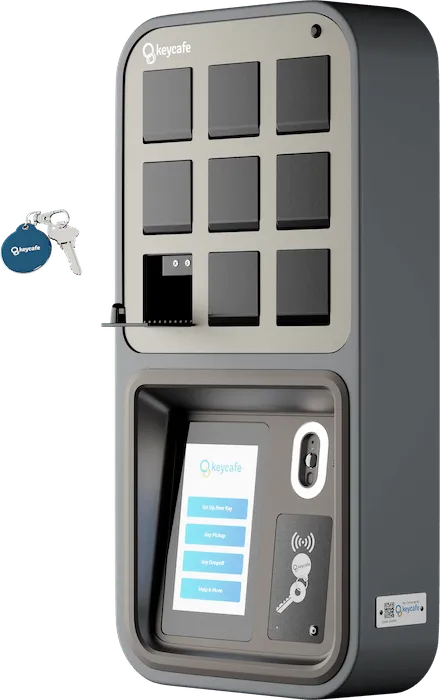
Keycafe offers a range of customization options across their product, including custom-branded vinyl wraps, branded fobs, and uploading a logo and setting brand colours for the SmartBox screen.
While KEYper Systems offers multiple colours of their key pegs, custom branding is not available for hardware or software.
Keycafe is designed for seamless multi-site management. Administrators can monitor and control key access from a centralized dashboard, providing real-time insights into key transactions across all locations. This makes it particularly useful for enterprises with distributed teams or shared access requirements.
KEYper Systems, by contrast, is more suited to single-location setups or businesses that require on-premises control. Users must be on the same internet network as the locker, so while management of multiple locations in close proximity is possible, true multi-location management is not possible.
%20(1).webp)

.webp)

