0 minutes
Written by
Luciano Picardo
Published on
April 24, 2026
Published on
April 24, 2026
Modified on
April 24, 2026
Go Back
.webp)
Managing a hotel is a constant balancing act between high-touch guest service and the maintenance of complex back-of-house infrastructure. On any given day, an elevator technician might be on-site for inspections, a pool company might be balancing chemicals, or an IT contractor might be updating the server room. While these visits are essential for operational success, they often create a silent bottleneck at the front desk or in the engineering office.
In many hotels, traditional key access methods—lockboxes, paper logbooks, or manual front-desk sign-outs—still dominate day-to-day routines. Every time a contractor arrives, a staff member must pause their work to verify the individual, locate the correct key, and wait for them to sign a log. These manual systems present several drawbacks for modern hotel operations:
By moving beyond these manual constraints, hotels can redirect reclaimed staff time toward enhancing the guest experience.
The primary risk in traditional vendor access management is the lack of a reliable audit trail. To move beyond this, hotels are adopting electronic key management systems that provide a level of oversight that paper logs cannot match:
One of the most effective best practices for managing regular contractors is the use of temporary access through auto-expiring access codes. Instead of a vendor waiting for a staff member to become available, management can streamline the process of grabbing a key from a central location:
While guest room security is a priority, contractor management typically focuses on the hotel's amenities and critical infrastructure, such as boiler rooms, server rooms, and fitness centers. The challenge here is often the forgotten key—a technician finishes their work and accidentally drives away with a key in their pocket.
Smart systems mitigate this risk through proactive monitoring:
Beyond security, an electronic key management system provides data that can be used to optimize the hotel’s financial health. By reviewing digital audit logs, managers can verify service invoices by seeing exactly when a contractor picked up a key and when they returned it.
This data also serves as a diagnostic tool for the hotel:
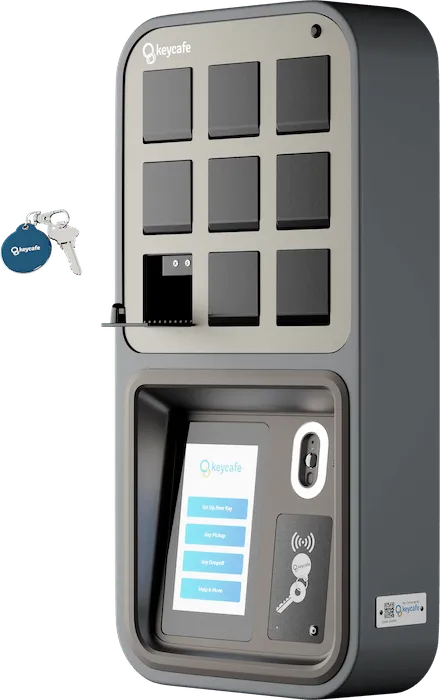
Keycafe is the industry standard for hotel vendor key management. Our modular SmartBox system scales with your hotel, supporting up to 429 keys per location. By utilizing one-time access codes, real-time alerts, and video accountability, Keycafe automates the handoff process and eliminates administrative bloat.
Stop managing keys and start managing your hotel. Learn more about Keycafe’s solutions for hotels.
Hotels can improve accountability by replacing manual paper logs with an automated electronic key management system. These systems create a tamper-proof digital audit trail that records the exact timestamp of every key retrieval and return, linked to a specific user or vendor. For enhanced security, some systems also include video accountability, capturing footage of the individual at the moment of access.
The most effective method for managing after-hours access is the use of temporary, auto-expiring access codes. This allows management to remotely issue a unique PIN to a contractor via email or SMS, enabling them to retrieve necessary keys from a secure SmartBox without requiring an on-site staff escort or front-desk check-in.
Automated systems reduce costs by virtually eliminating the need for expensive rekeying events caused by lost or unreturned master keys. By sending real-time alerts to managers when a key is overdue, the system ensures immediate recovery of assets. Additionally, these systems save significant labor hours daily by removing the administrative burden of manual key handoffs and tracking.
.webp)

%20(2).png)

