0 minutes
Written by
Nicole Arasaki
Published on
June 18, 2026
Published on
June 18, 2026
Modified on
June 18, 2026
Go Back
Vehicle sales may start the customer relationship, but the service department is what keeps customers coming back. For most dealerships, fixed operations generate steady long-term revenue through repeat service visits, customer retention, and future vehicle purchases. Drivers who regularly service their vehicles at a dealership are also more likely to buy their next vehicle from the same dealer group.
Despite how important the service experience is, one common issue still creates daily frustration: managing vehicle keys.
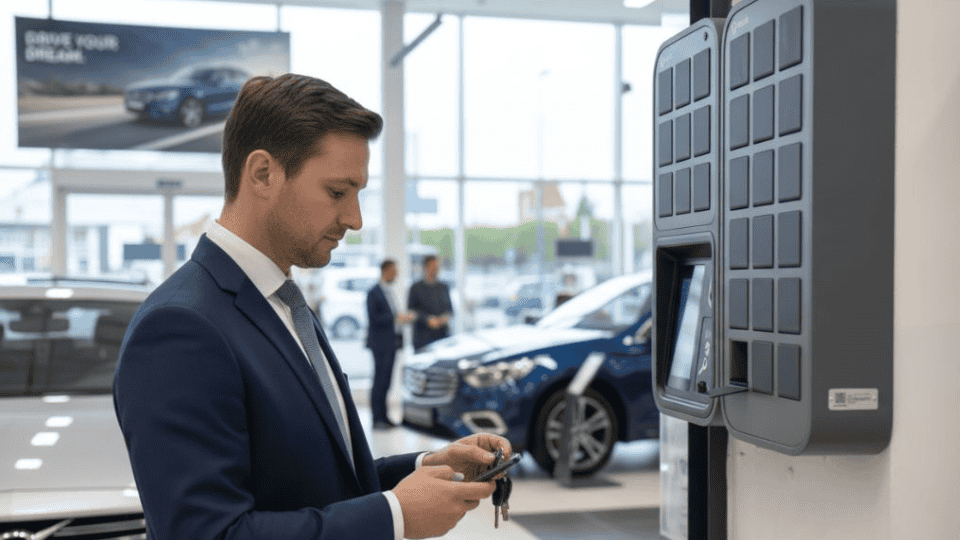
Many dealerships still rely on manual systems like pegboards, paper logs, desk drawers, or unlabeled cabinets to store keys. These outdated methods often slow down operations, especially during busy hours. When a key cannot be found immediately, service advisors have to stop helping customers and search the dealership instead.
These delays are often visible to customers, leading to longer wait times and a less organized experience. For dealership managers, automated key tracking is no longer just about security. It is a practical way to improve efficiency, reduce frustration, and create a smoother customer experience.
The busiest period for most service drop-offs occurs between 7:00 AM and 9:00 AM. During this brief window, dozens of customers arrive simultaneously, expecting a fast, predictable check-in process before heading to their workplaces.
With traditional manual workflows, service advisors must log vehicle information by hand, write out paper tags, walk keys to a back storage area, and return to the counter before helping the next client. As vehicle volume increases, lines quickly form across the drive and delays become completely unavoidable.
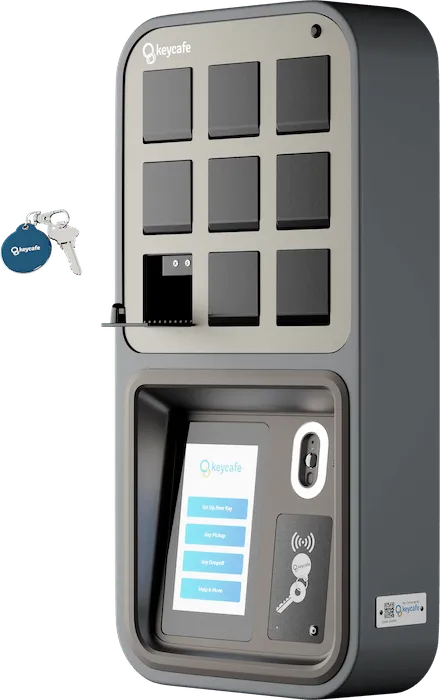
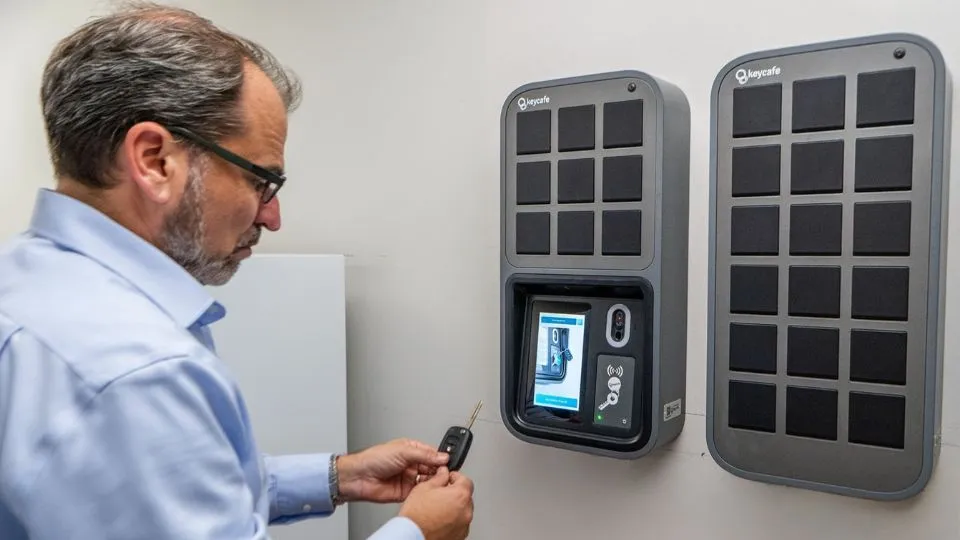
Automated key locker systems simplify this intake process by creating a secure, structured method for vehicle drop-off. Customers can use self-service lockers to check in independently by entering a secure access code or scanning a QR code. The system instantly records the drop-off time, locks the key safely inside an automated compartment, and updates the dealership’s digital tracking dashboard in real time. This workflow allows service advisors to stay focused on face-to-face communication and customer service rather than repetitive administrative tasks during peak hours.
.jpg)
Modern consumers expect flexibility that fits their schedules. Many vehicle owners are unable to visit a dealership during standard business hours. Traditional overnight drop boxes provide limited functionality and do not address the challenge of after-hours vehicle pickup once the service department has closed.
Utilizing weatherproof, internet-connected storage lockers allows a dealership to offer secure 24/7 vehicle access without requiring additional overnight staff on the payroll. This flexibility alters the traditional fixed operations workflow across several common scenarios:
When a repair is completed, the dealership can send the customer a secure, one-time access code by text or email. The customer can then retrieve their keys at a time that works best for them. Whether they arrive at 5:00 AM or midnight, the pickup process takes only seconds.
This flexibility gives customers more control over when they collect their vehicles while helping dealerships provide a more convenient service experience.
Vehicle keys move constantly throughout a dealership service department. During a typical service visit, a key may be handled by service advisors, technicians, parts staff, detailers, lot attendants, and delivery coordinators before the vehicle is returned to the customer.
Many of these transfers happen through direct employee handoffs. For example, a technician may pass a key to a detailer after repairs are complete, who then hands it off to a lot attendant preparing the vehicle for pickup. While these handoffs are a normal part of dealership operations, they can make it difficult to track the location of a key when relying on manual processes.
Without a reliable key tracking system, employees often spend valuable time searching for keys, checking with coworkers, or retracing steps to determine who last handled a vehicle. Even a small delay can slow down vehicle delivery and create frustration for both staff and customers.
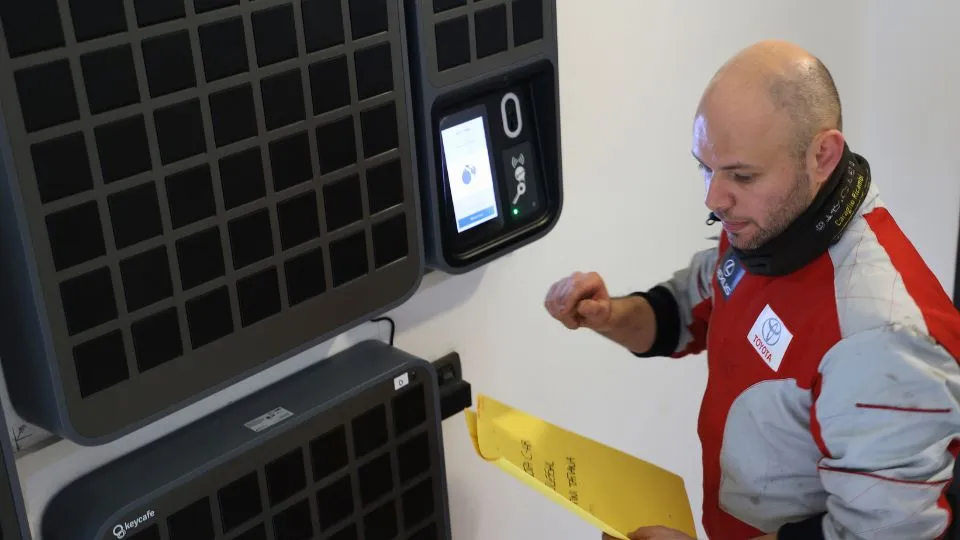
An electronic key management system gives every department real-time visibility into key activity. Each time a key is checked out, returned, or transferred to another employee, the system automatically records the action. Staff can instantly see who has the key, where it is located, and when it was last accessed.
Instead of walking the service drive or interrupting technicians to track down a key, employees can quickly find the information they need from a mobile device or desktop dashboard. This improves communication between departments, reduces delays, and helps keep vehicles moving smoothly through the service process.
By creating a clear chain of custody for every vehicle key, dealerships can improve efficiency, increase accountability, and ensure vehicles are ready when customers arrive for pickup.
As dealership service departments adapt to higher vehicle volumes and rising customer expectations, operational efficiency has become a key competitive advantage. Delays caused by misplaced keys, disorganized vehicle handoffs, and manual tracking processes can negatively impact both staff productivity and the customer experience. In today's connected environment, even minor service frustrations can quickly lead to negative online reviews and damage a dealership's reputation.
Automated key management systems help eliminate these challenges by providing secure, real-time visibility into key activity, reducing lost keys, improving accountability, and enabling faster vehicle pickups and handoffs. By replacing outdated manual processes with digital tracking, dealerships can create a more organized and professional service operation while reducing security risks and costly key replacements.
When customers experience a smooth, efficient service visit, trust in the dealership increases. That trust contributes to higher satisfaction scores, stronger retention, and long-term loyalty. Solutions such as Keycafe help dealerships modernize key management across departments, supporting more efficient workflows and helping service operations deliver a more consistent and customer-focused experience.
The system features a digital tool called field swaps to maintain tracking during direct employee handoffs. Instead of walking back to return the keys to a physical locker, employees can log the transfer directly through their mobile devices. This action updates the digital chain of custody in real time, saving staff walking time while ensuring managers always know who is currently holding the keys.
SmartBoxes include a built-in offline mode and backup battery power to ensure continuous operation during connectivity losses. If an unexpected server error occurs, the terminal recognizes the issue and allows users to gain authorized access via pre-generated offline codes. Customers can still complete their early morning vehicle drop-offs or late-night pickups without operational interruptions.
Administrators can set granular user-level permissions to ensure staff members only access keys relevant to their specific shifts and duties. The software also includes a setting to limit the maximum number of keys an individual can check out simultaneously. This restriction prevents employees from hoarding keys and keeps the entire fleet moving smoothly through the service cycle.
The system utilizes programmable key exchange alerts that trigger a notification the moment a key moves. Dealerships can route these events through webhooks into their existing customer relationship management systems or team communication tools. For instance, a detailing team or a lot attendant can receive an automatic notification to prepare a vehicle for customer pickup as soon as a technician completes a repair.